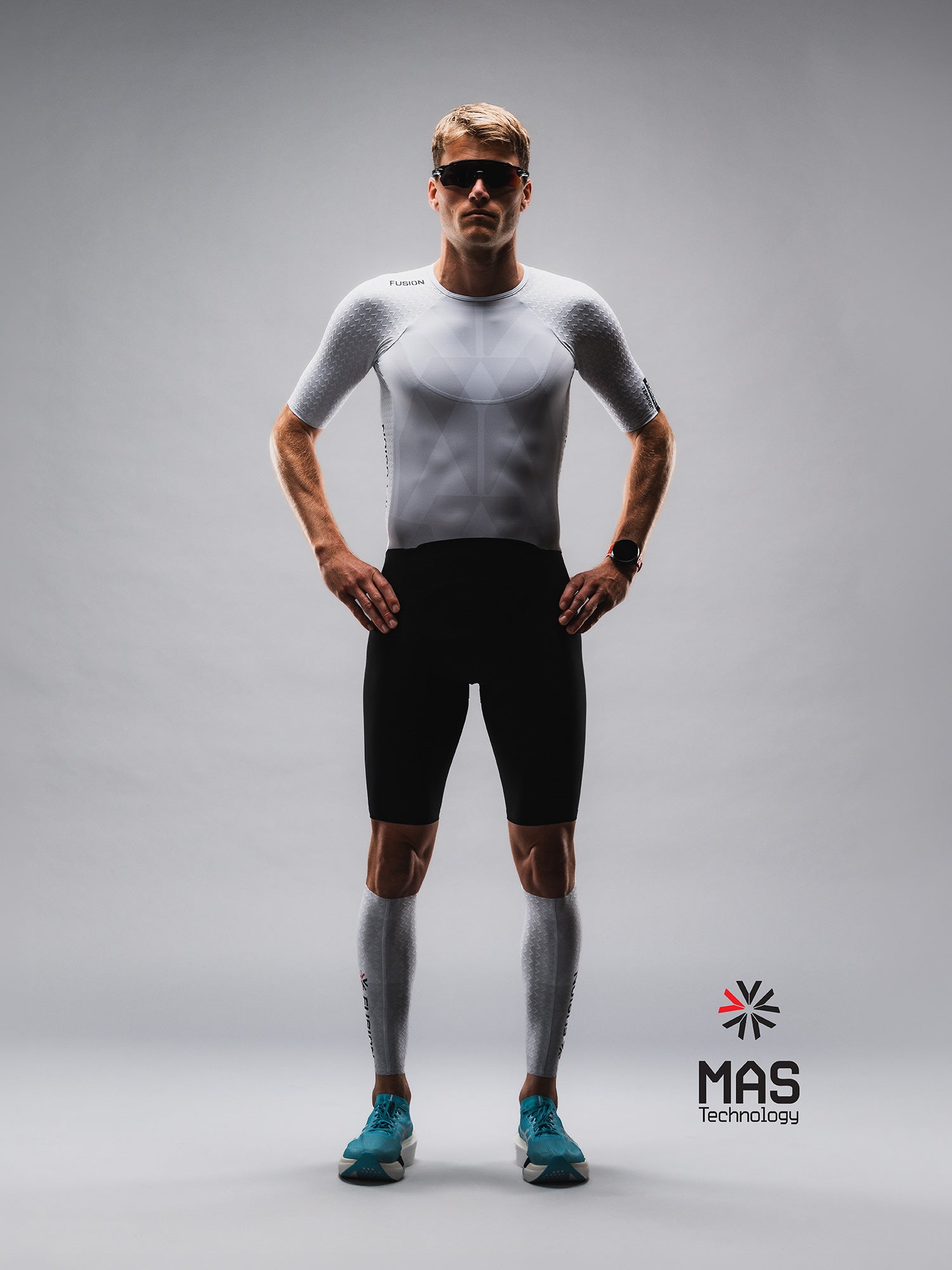
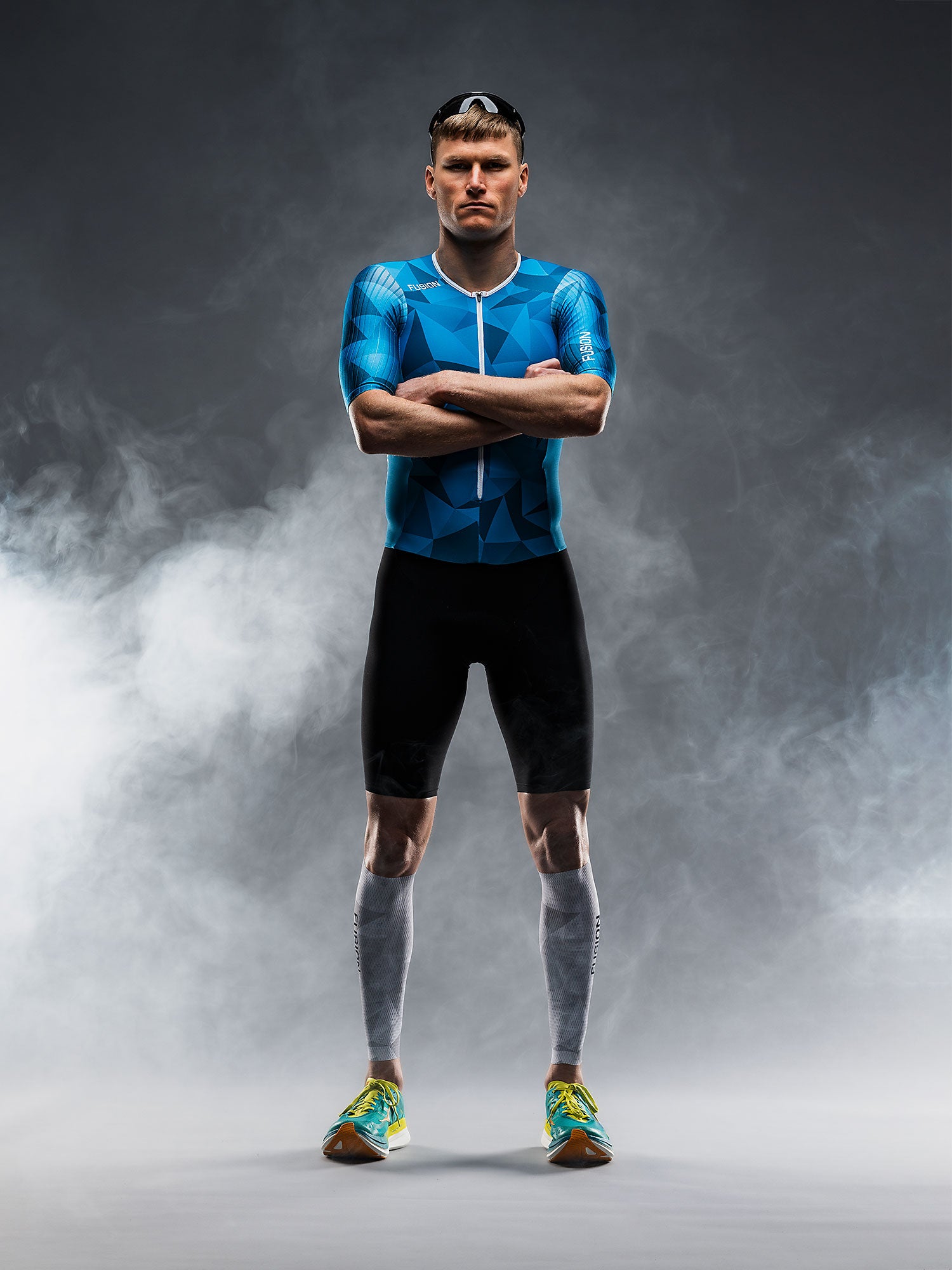
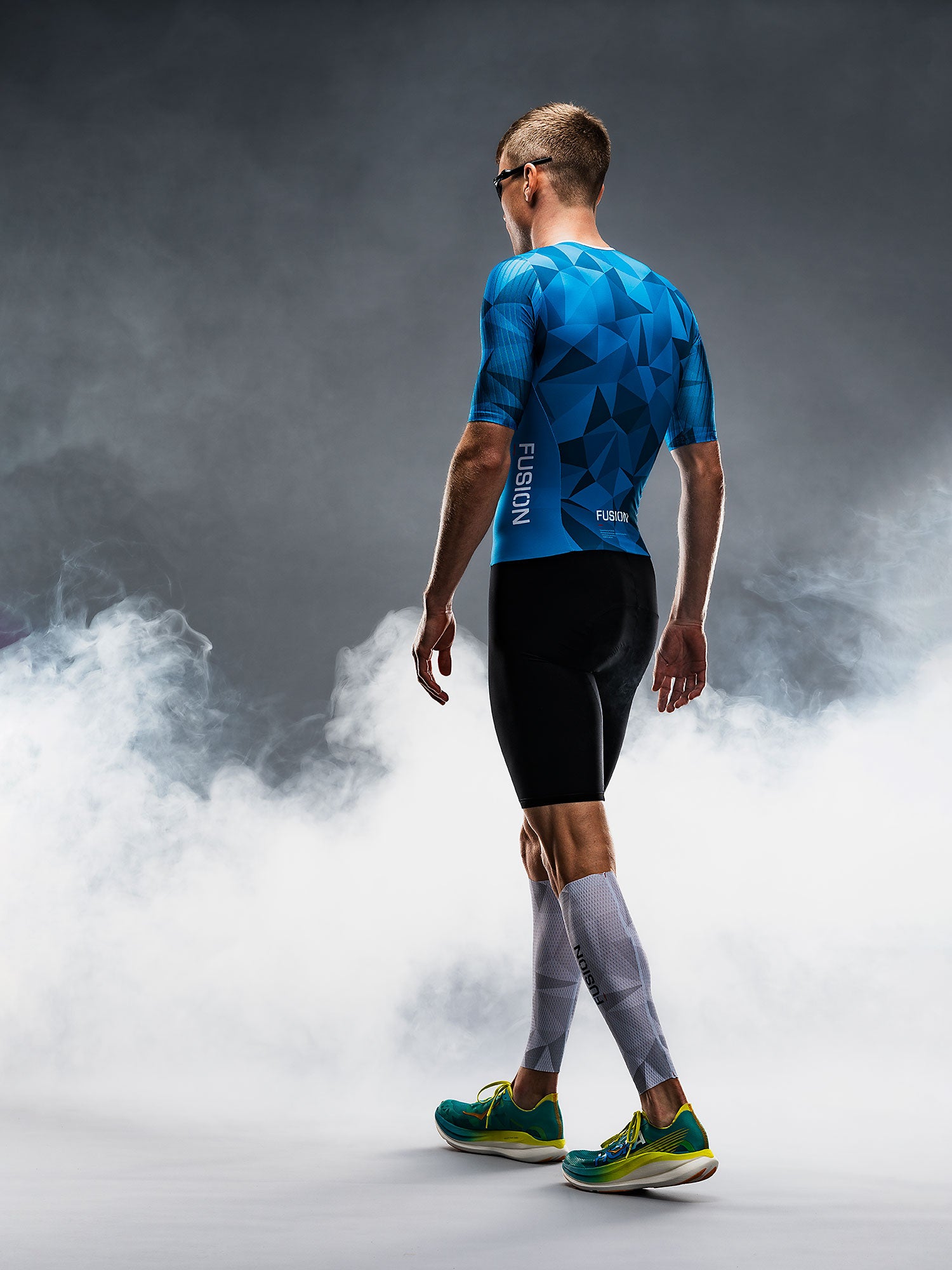
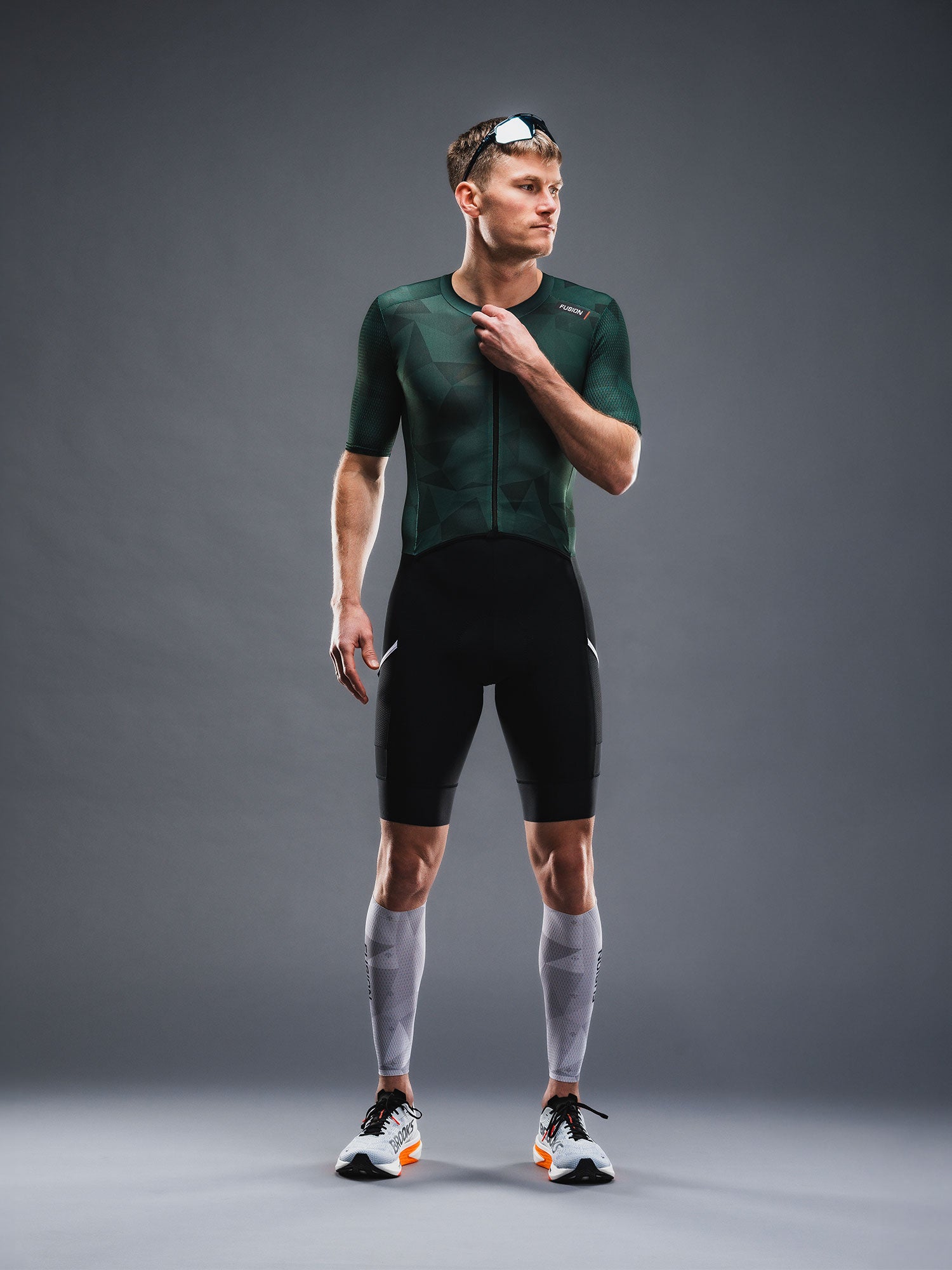
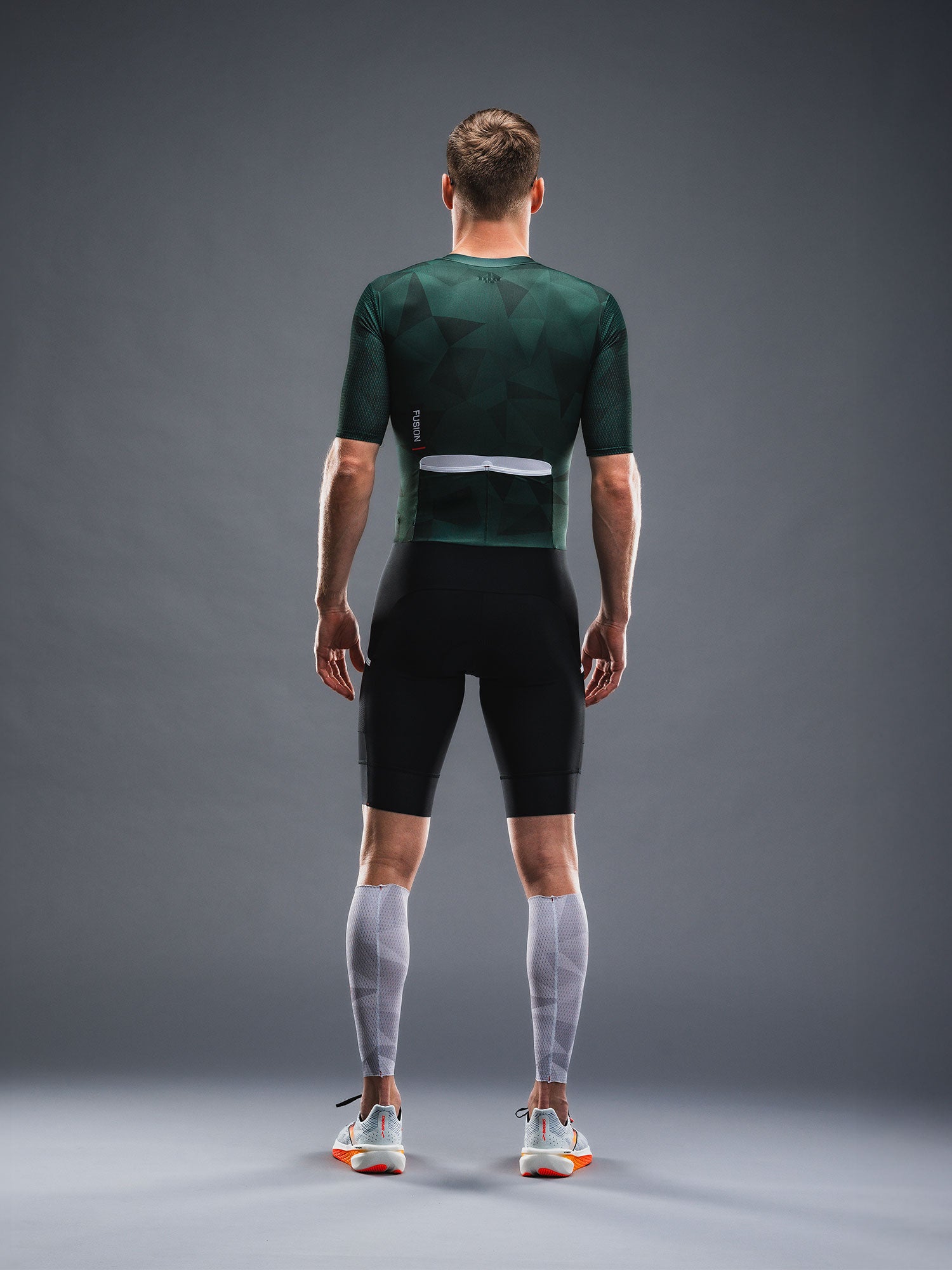
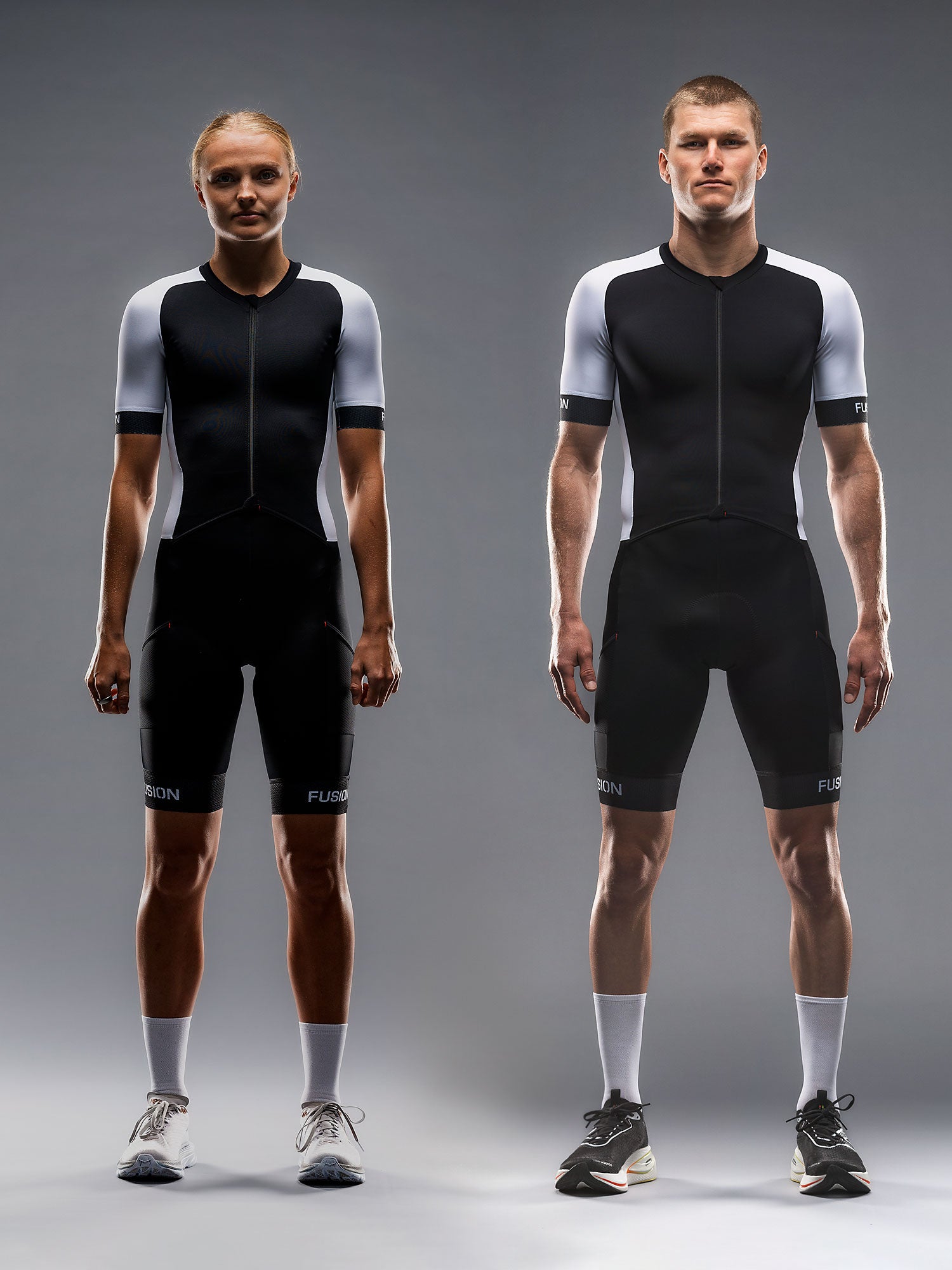
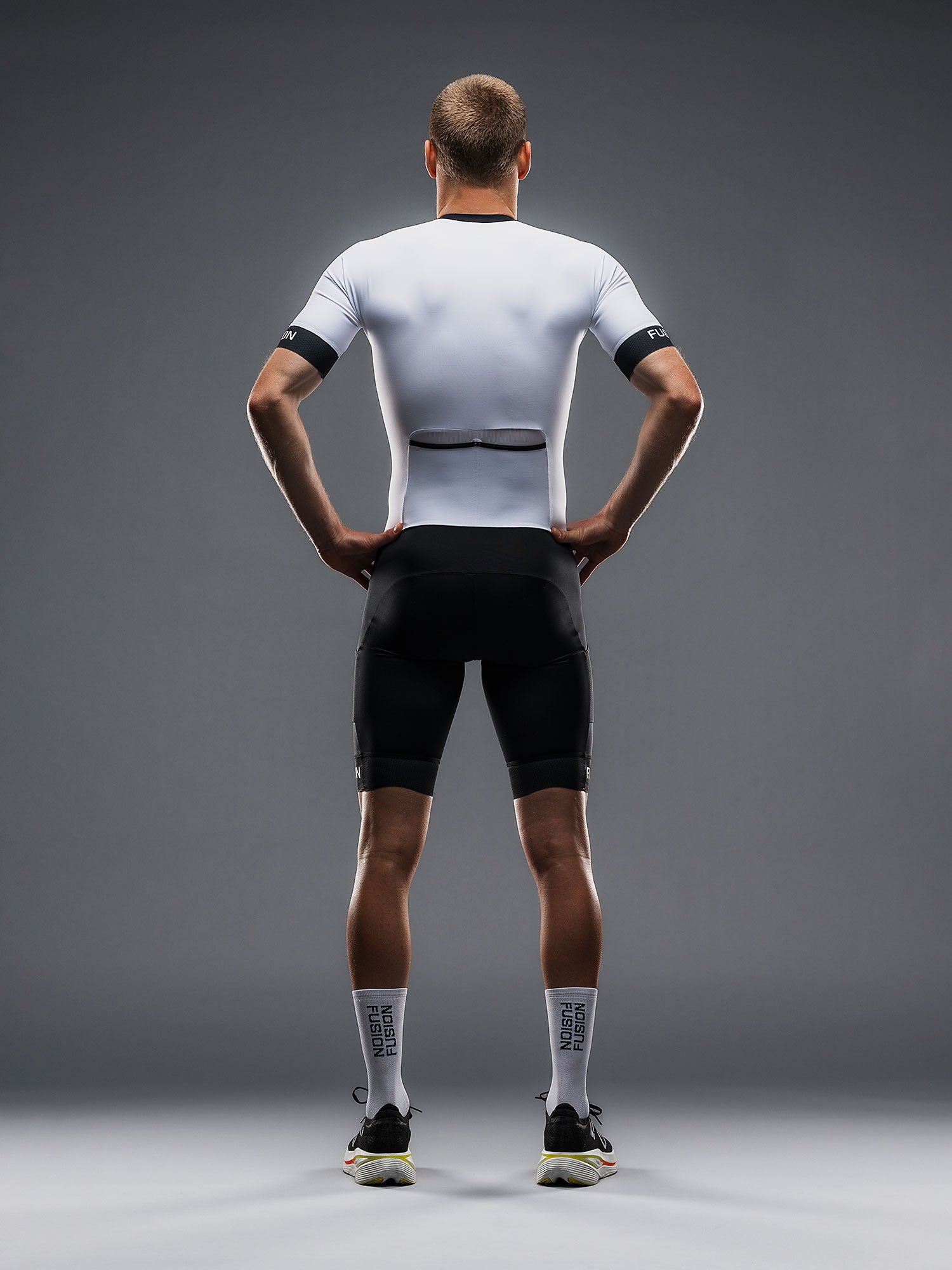
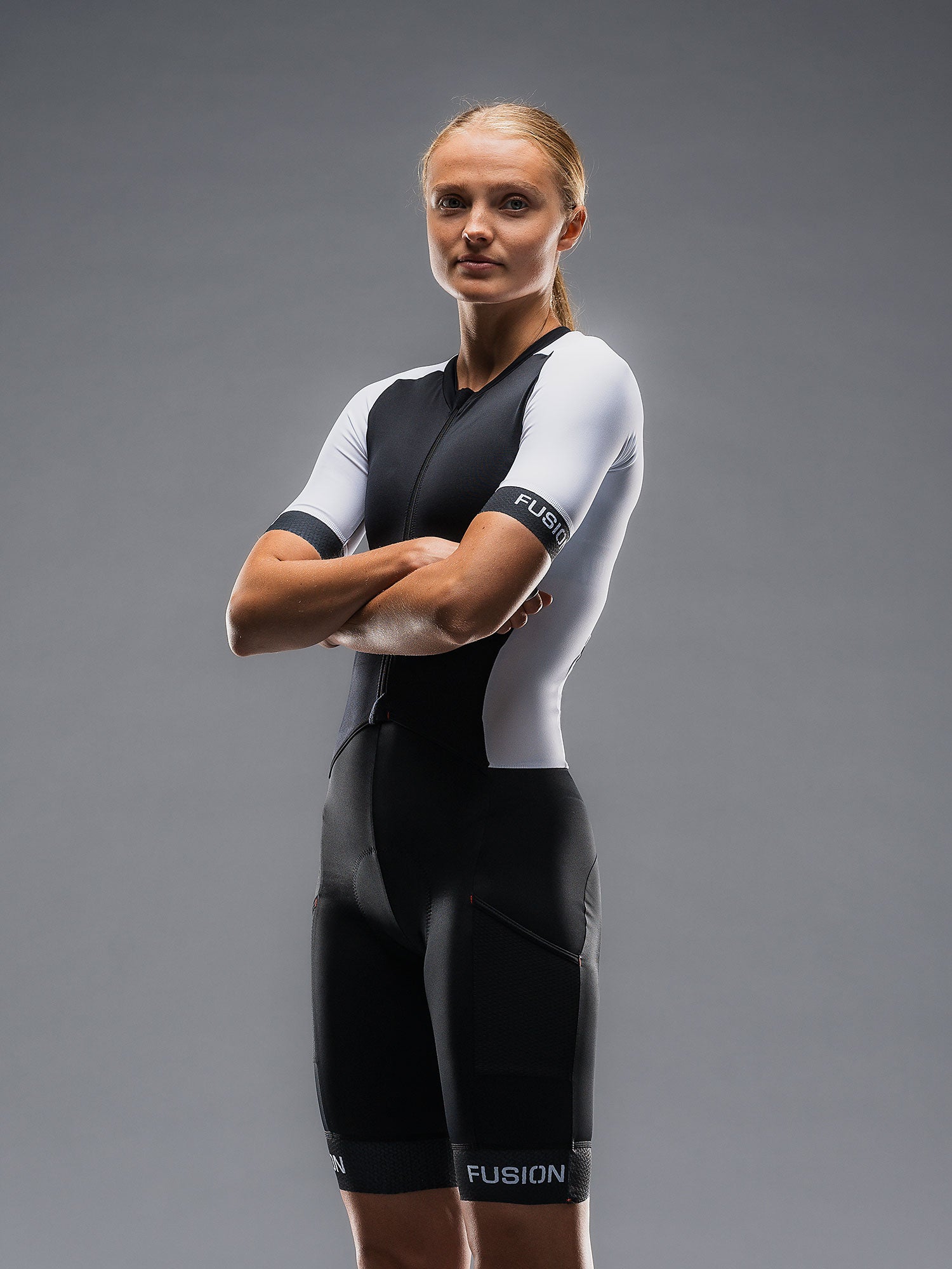
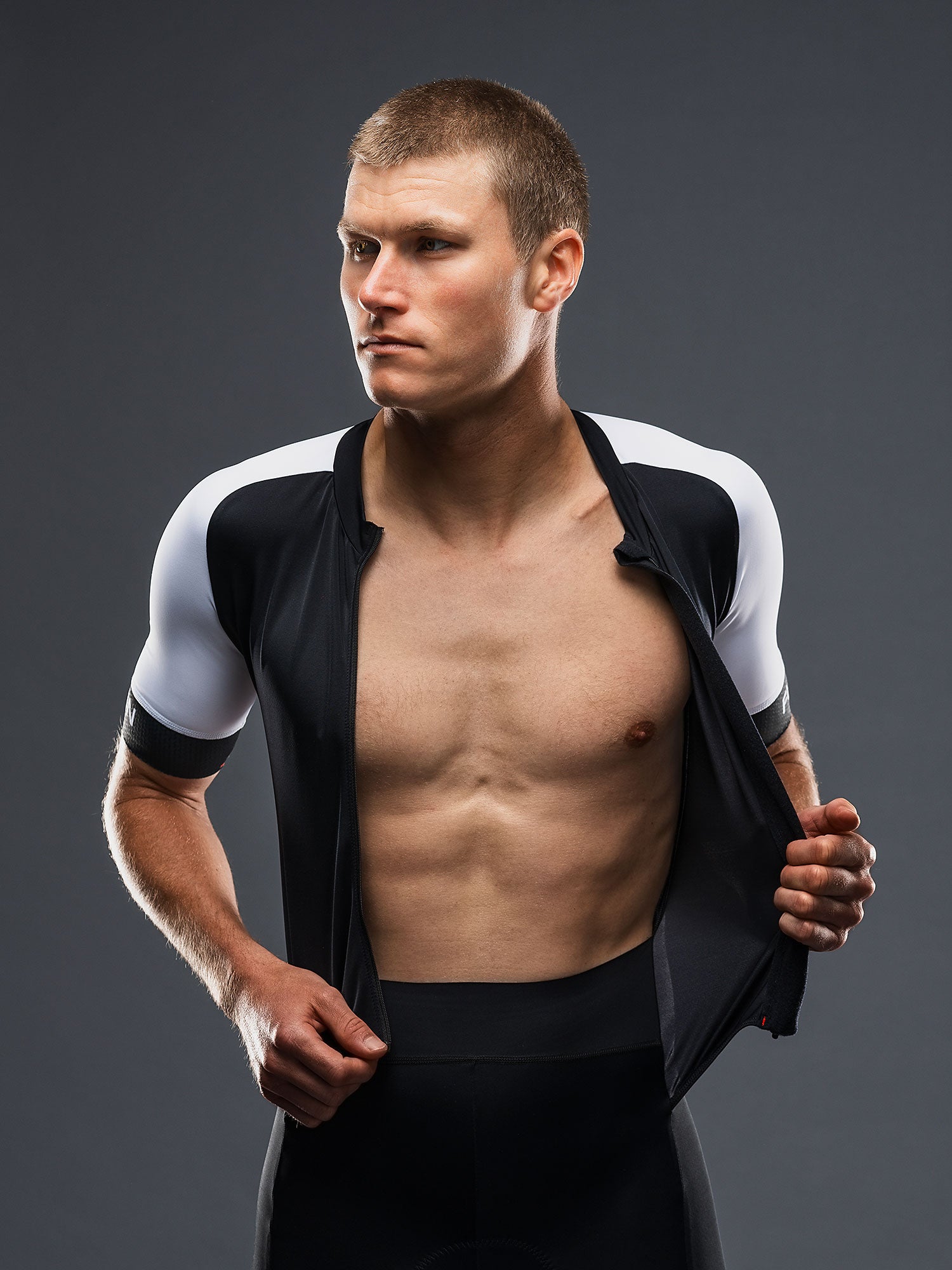
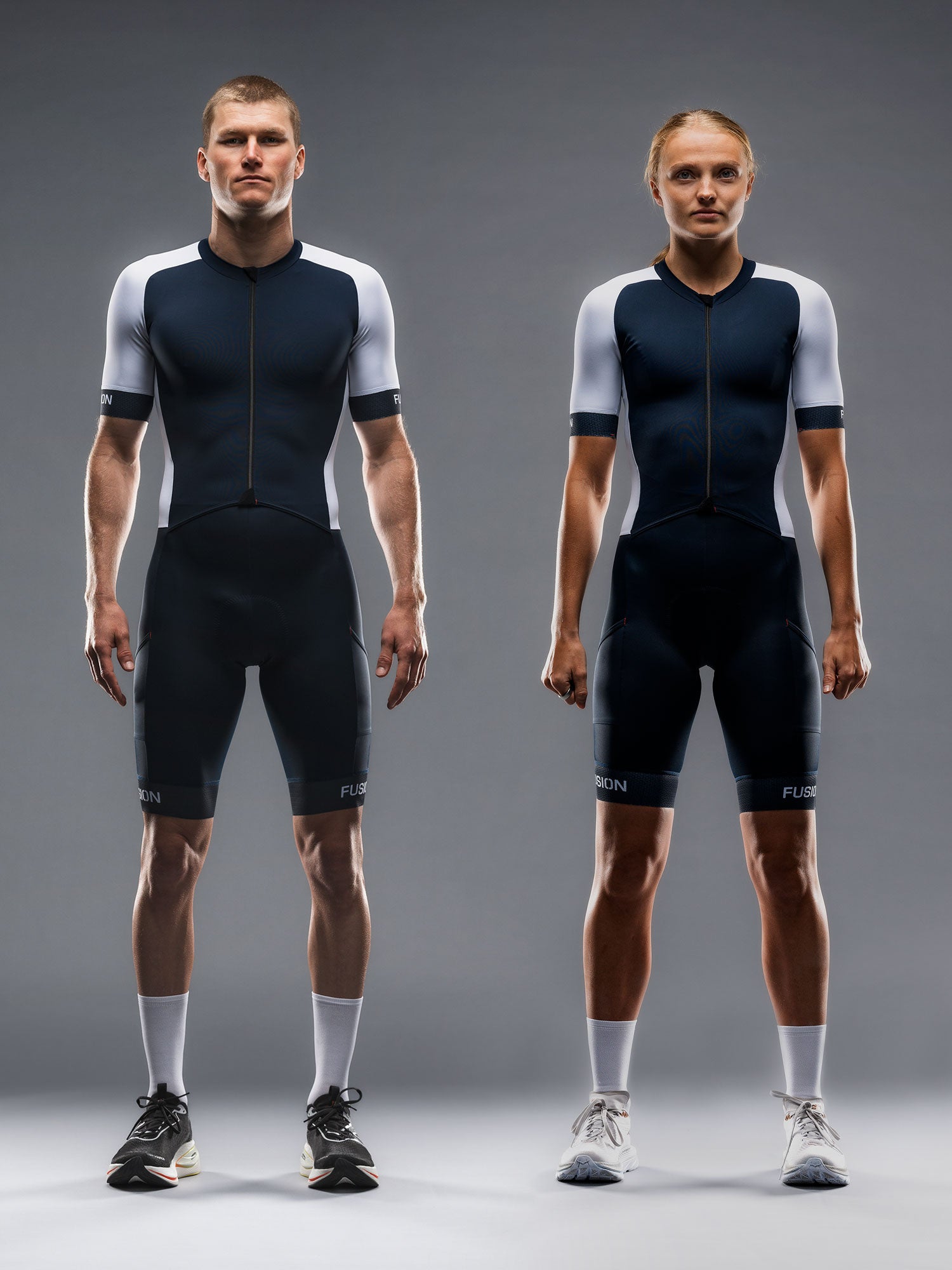
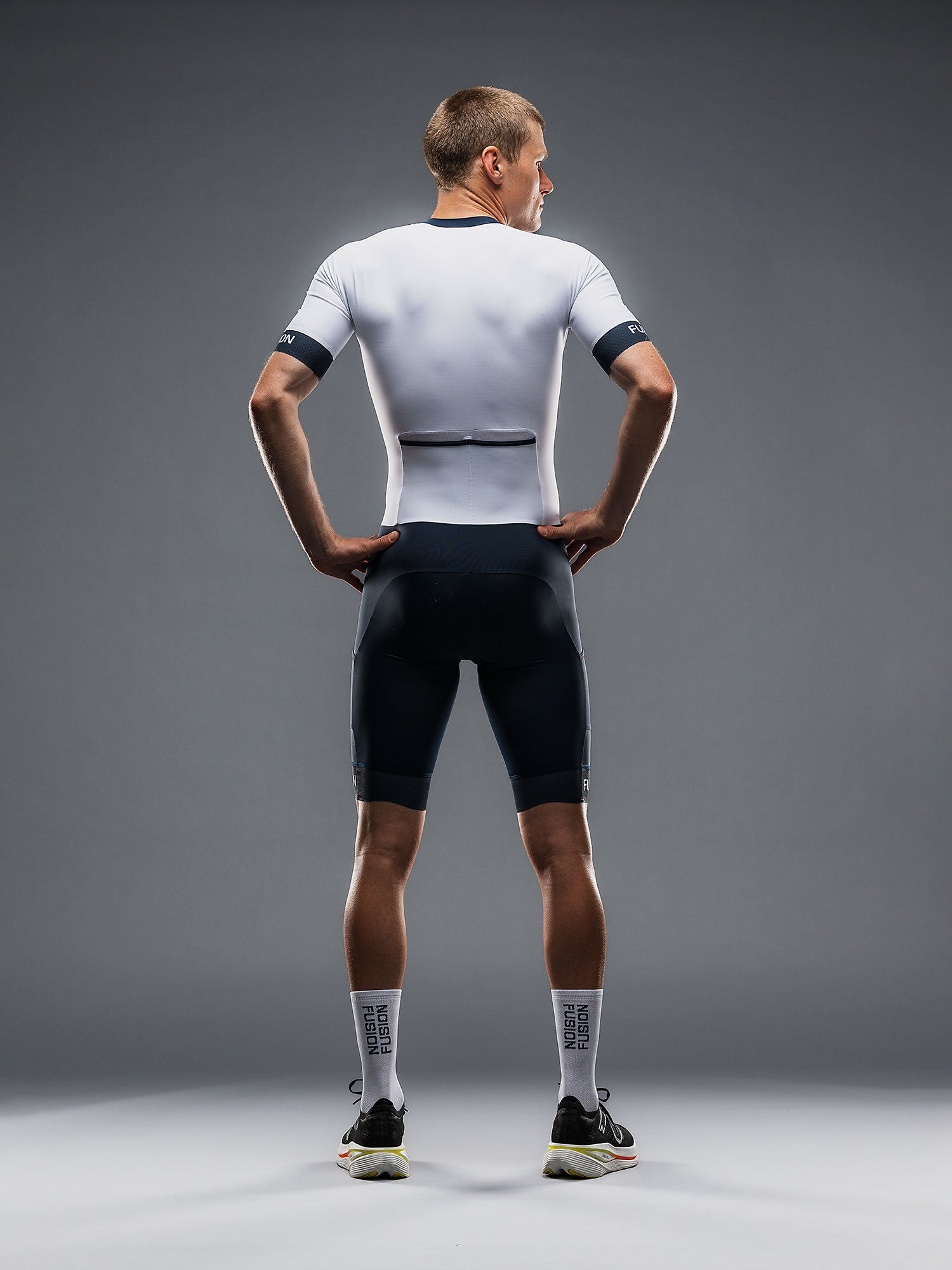
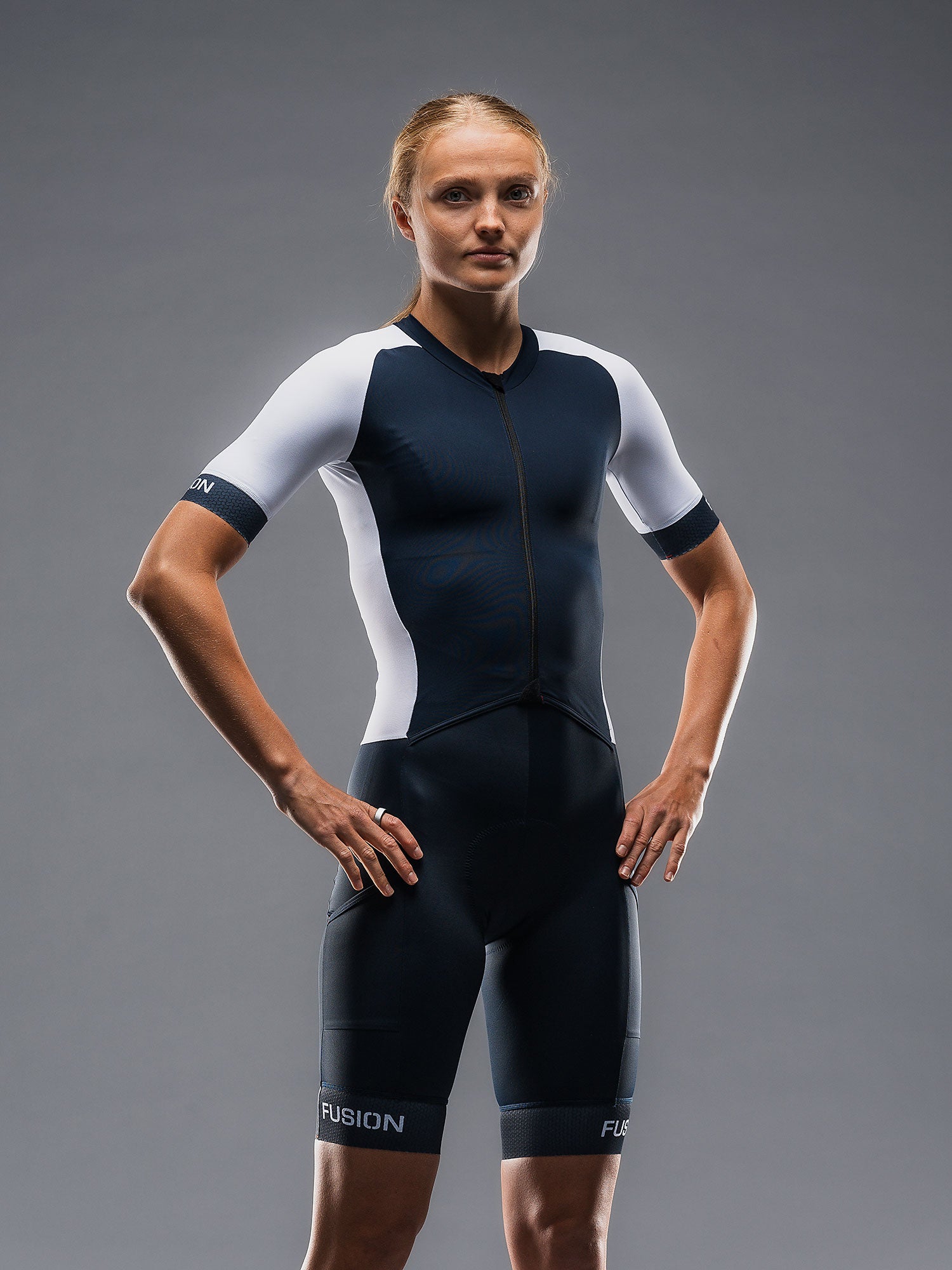
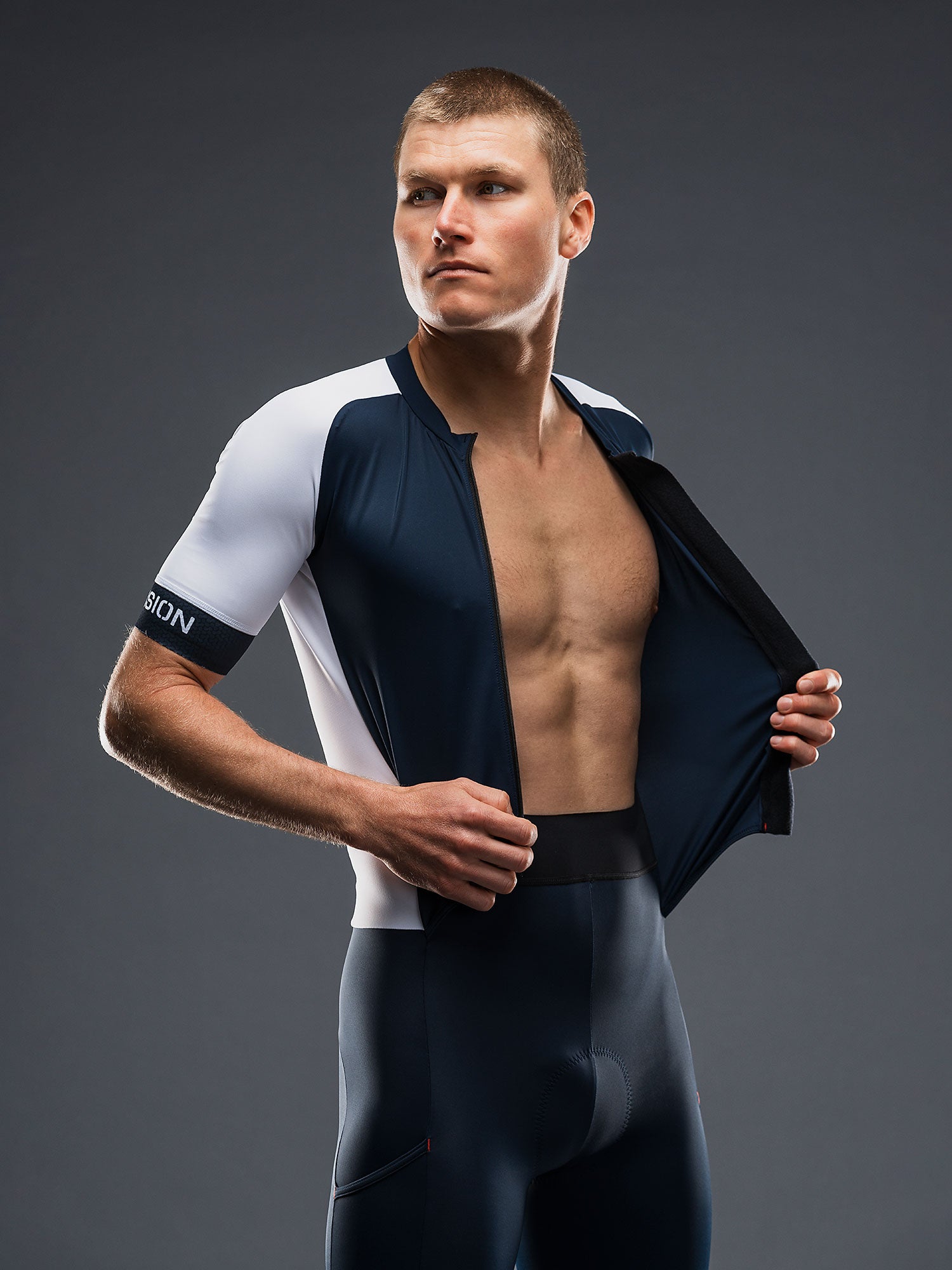
Explore our different tri suits and discover your own TEMPO!
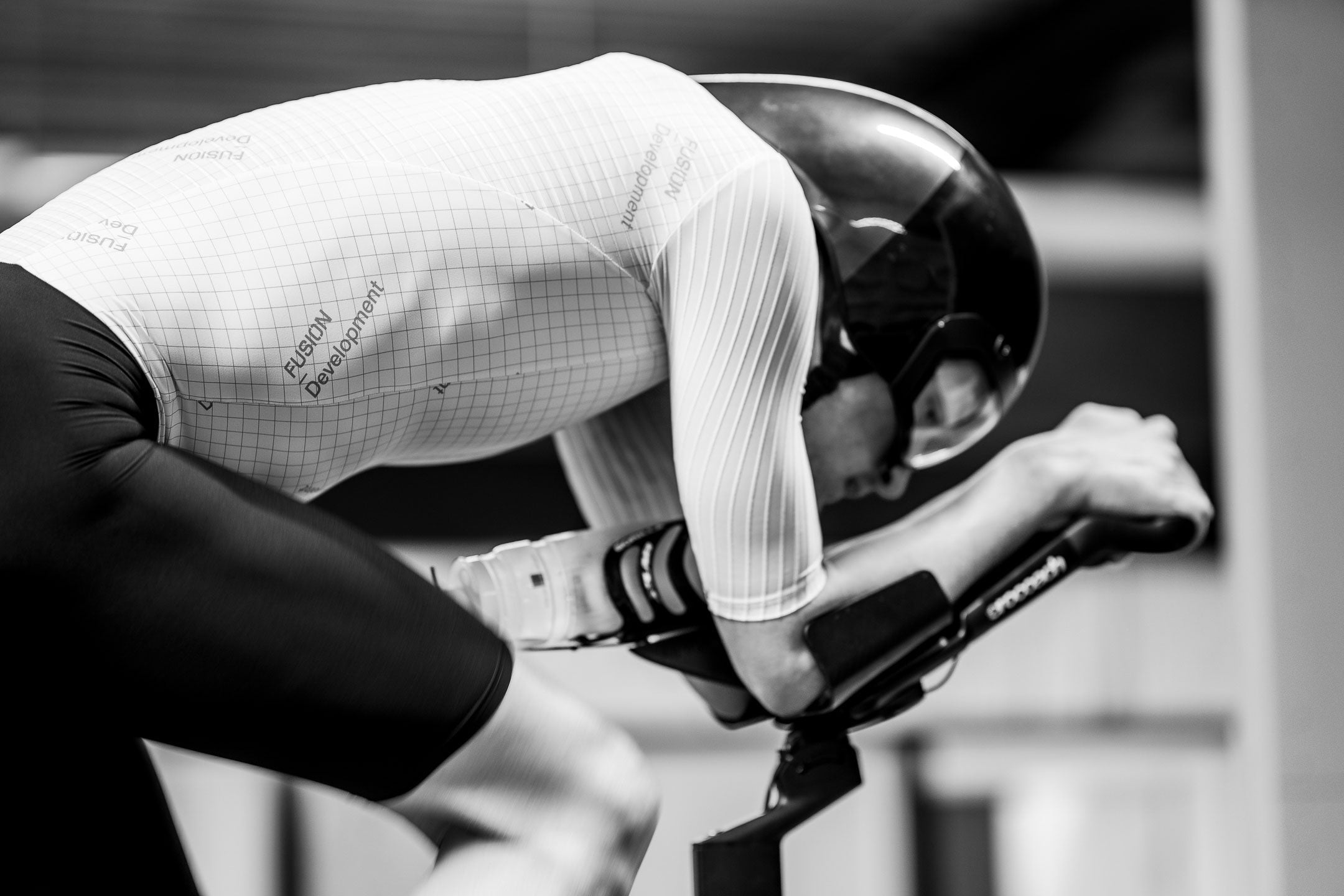
Developing FUSION’s fastest-ever tri suit for professional athletes
13. May 2025
The FUSION Magazine
Related articles
Three Zip Necks for three different needs
Read article
Built to keep you riding through winter
Read article
FUSION is looking for two new world-class stars and offering four ambitious amateurs a year with a professional setup
Read article
The Story Behind a Milestone for Womens Hot Long Tights
Read article
FUSION and Uno-X Mobility Cycling look back on two great years
Read article
Why we created MAS Tech
Read article
By Johannes Rom Dahl, Product Research & Development, FUSION
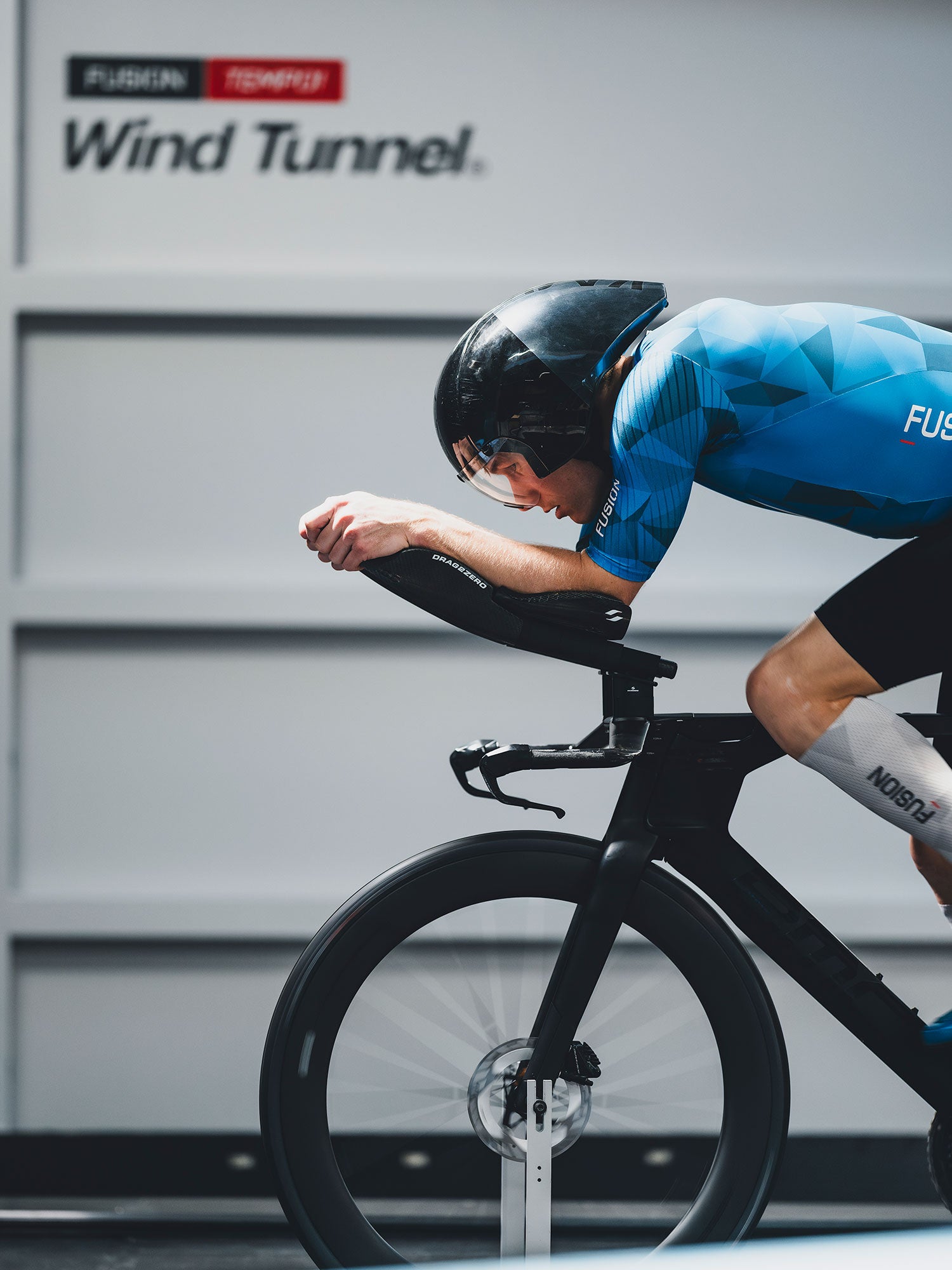
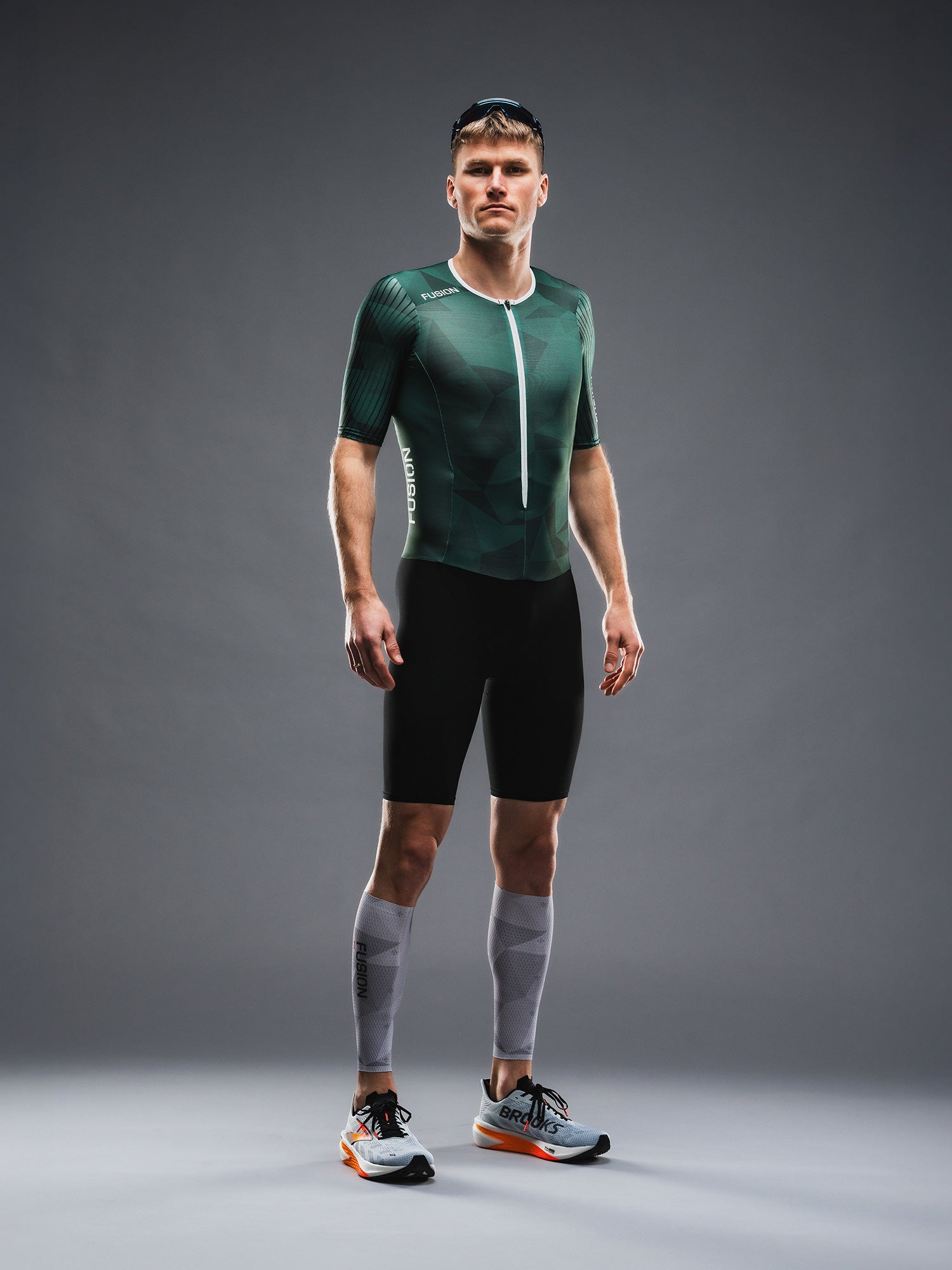
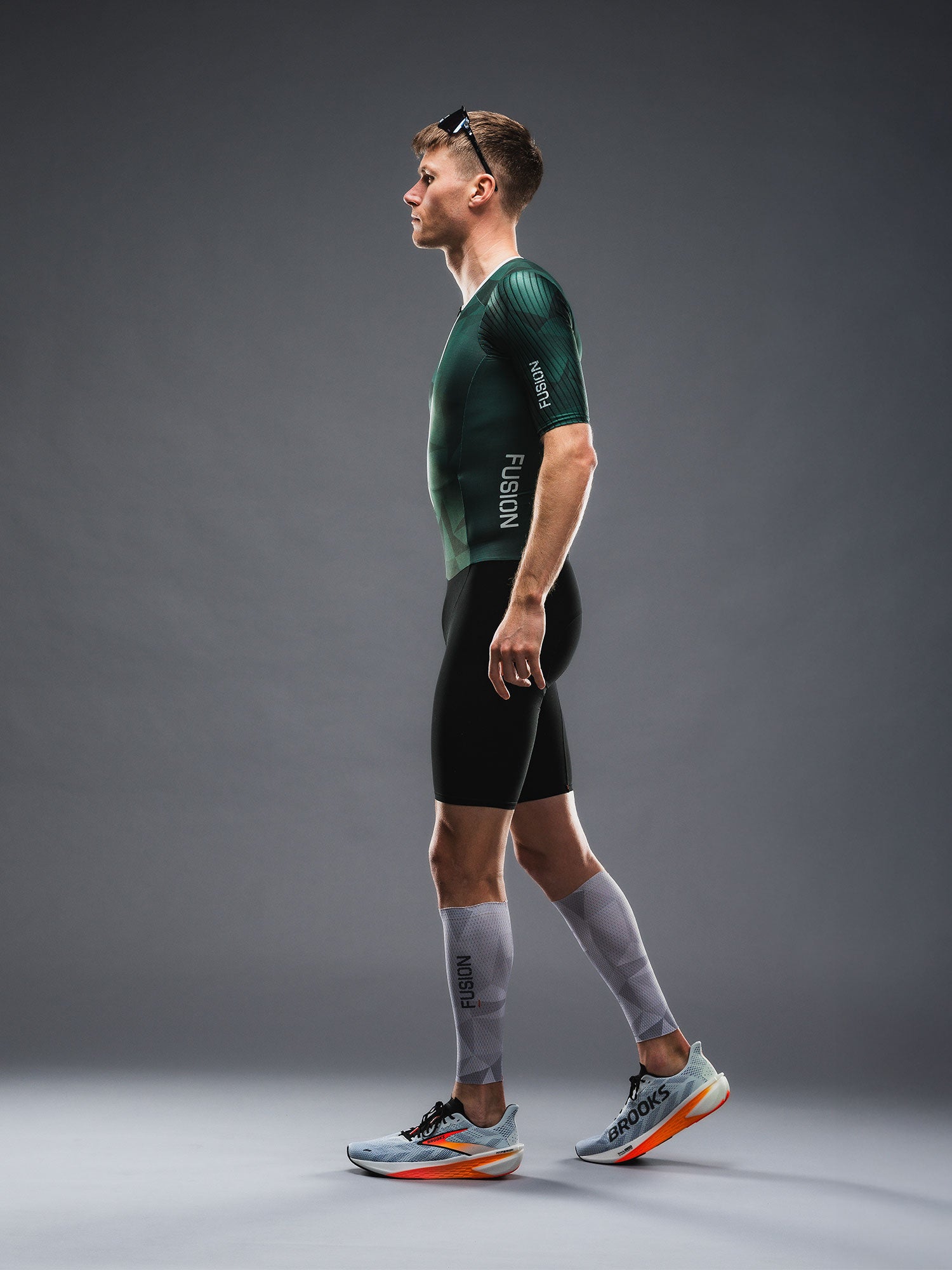
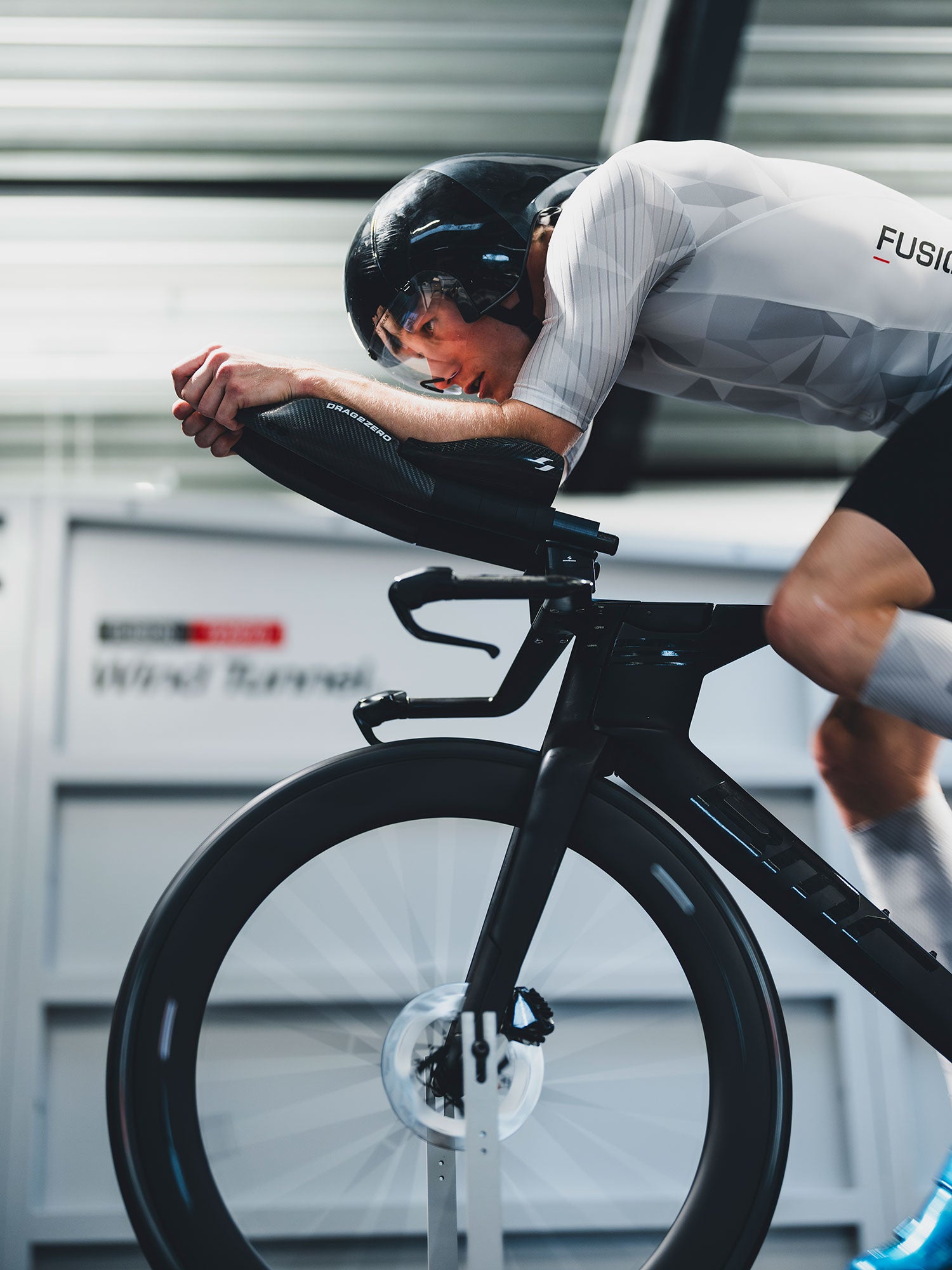
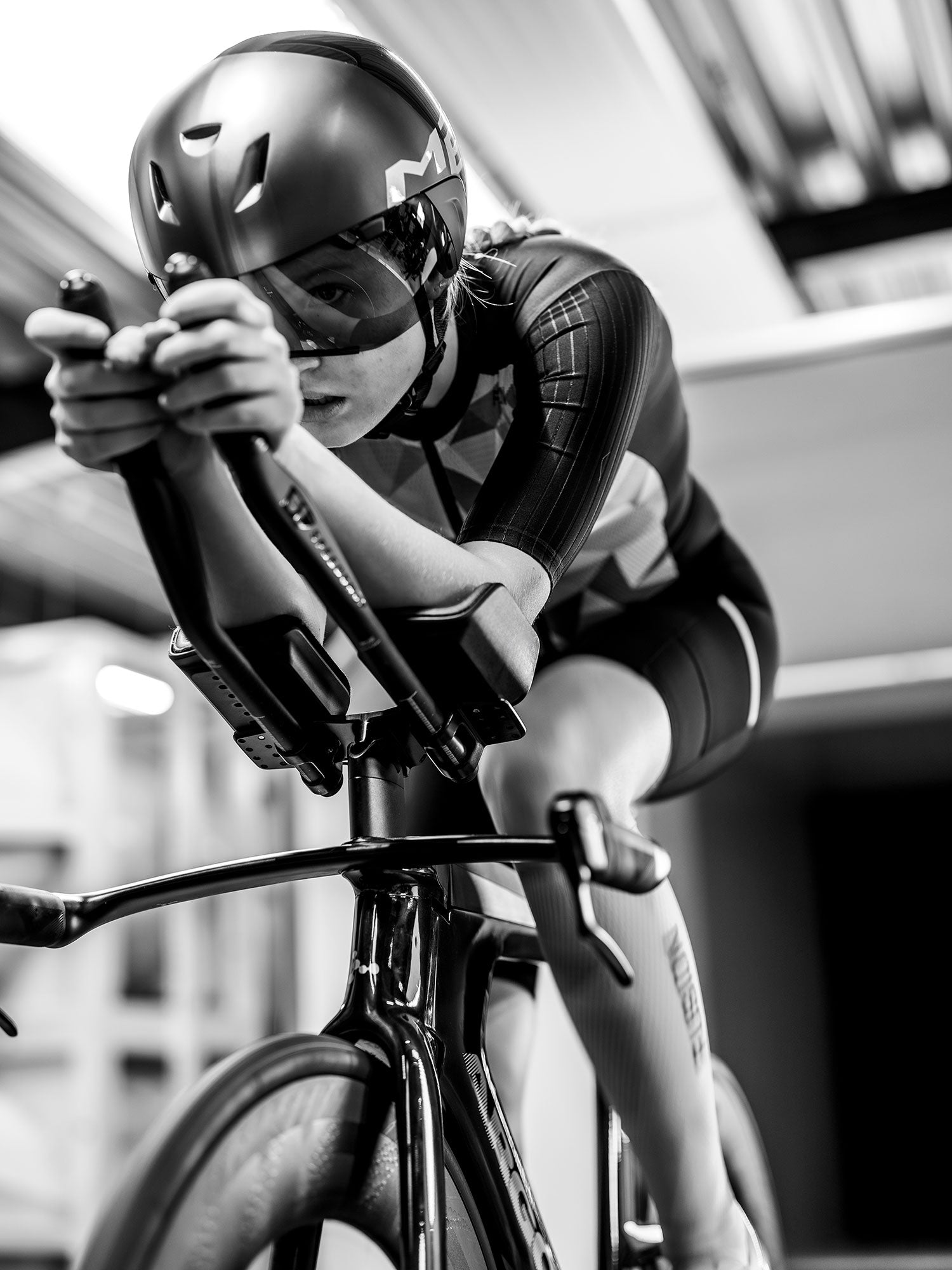
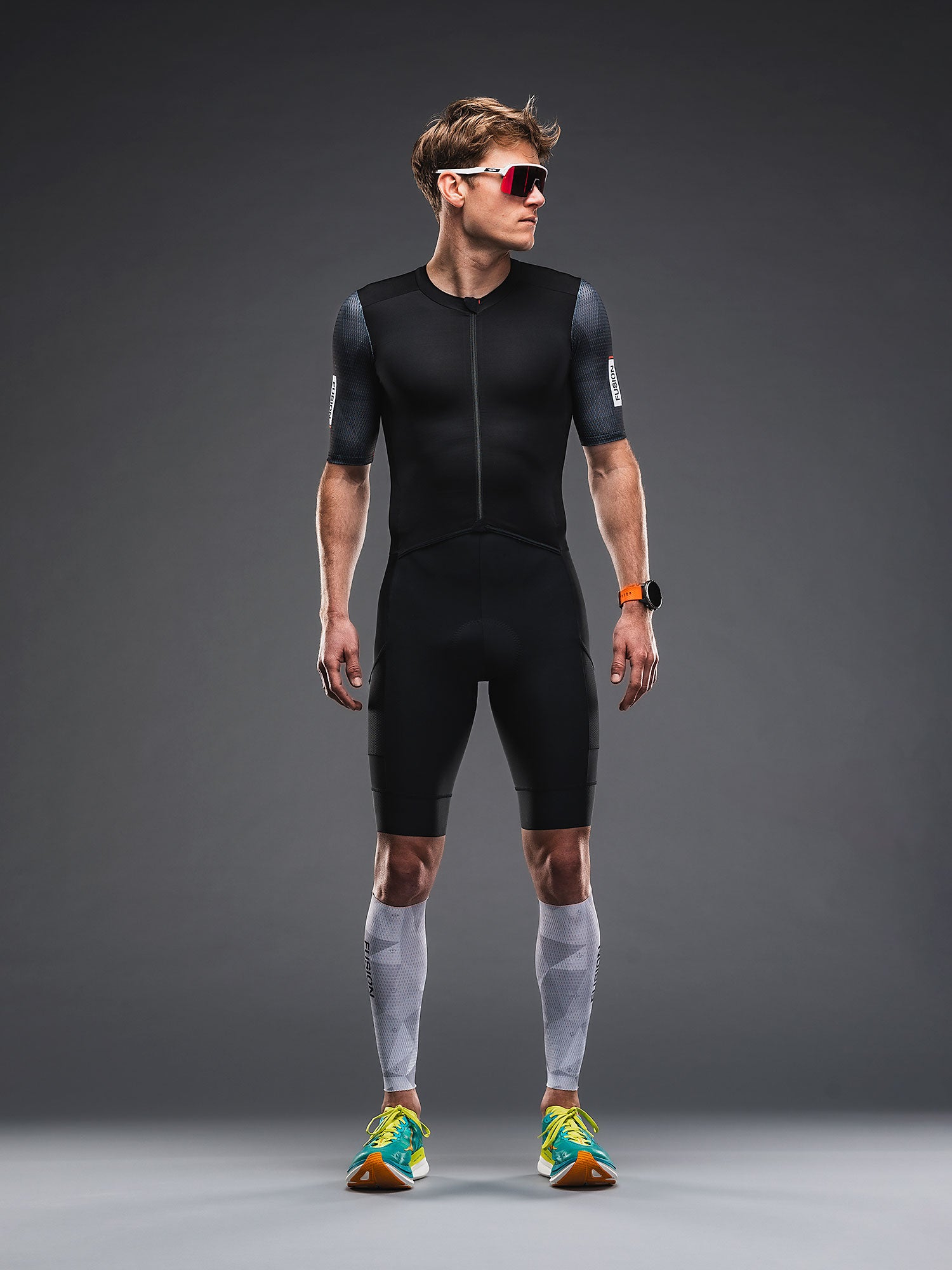
When we began developing the new TEMPO! PRO Tri Suit, our goal was to create a tri suit that performs at its very best within the speed ranges and riding positions used by our professional triathletes and competitive age-group athletes. Designed specifically for speeds above 40 km/h and modern, aggressive triathlon positions, the suit has been validated through extensive testing with a wide range of athletes – in our own TEMPO! Wind Tunnel, on indoor and outdoor velodromes and on the road.
In this article, I take you behind the scenes of the development process, exploring how we engineered the suit for aerodynamic efficiency at professional speeds and why we believe it is essential to offer a range of suits tailored to different athlete profiles and use cases.
The design and development process behind the TEMPO! PRO Tri Suit
Every new product starts with a clear definition of its intended use. Fabric selection takes into account the discipline, typical speed, the athlete’s anticipated position on the bike and requirements for thermoregulation, moisture transport and breathability. A tri suit must perform throughout the entire race, and properties such as UV protection and cooling are central to its development.
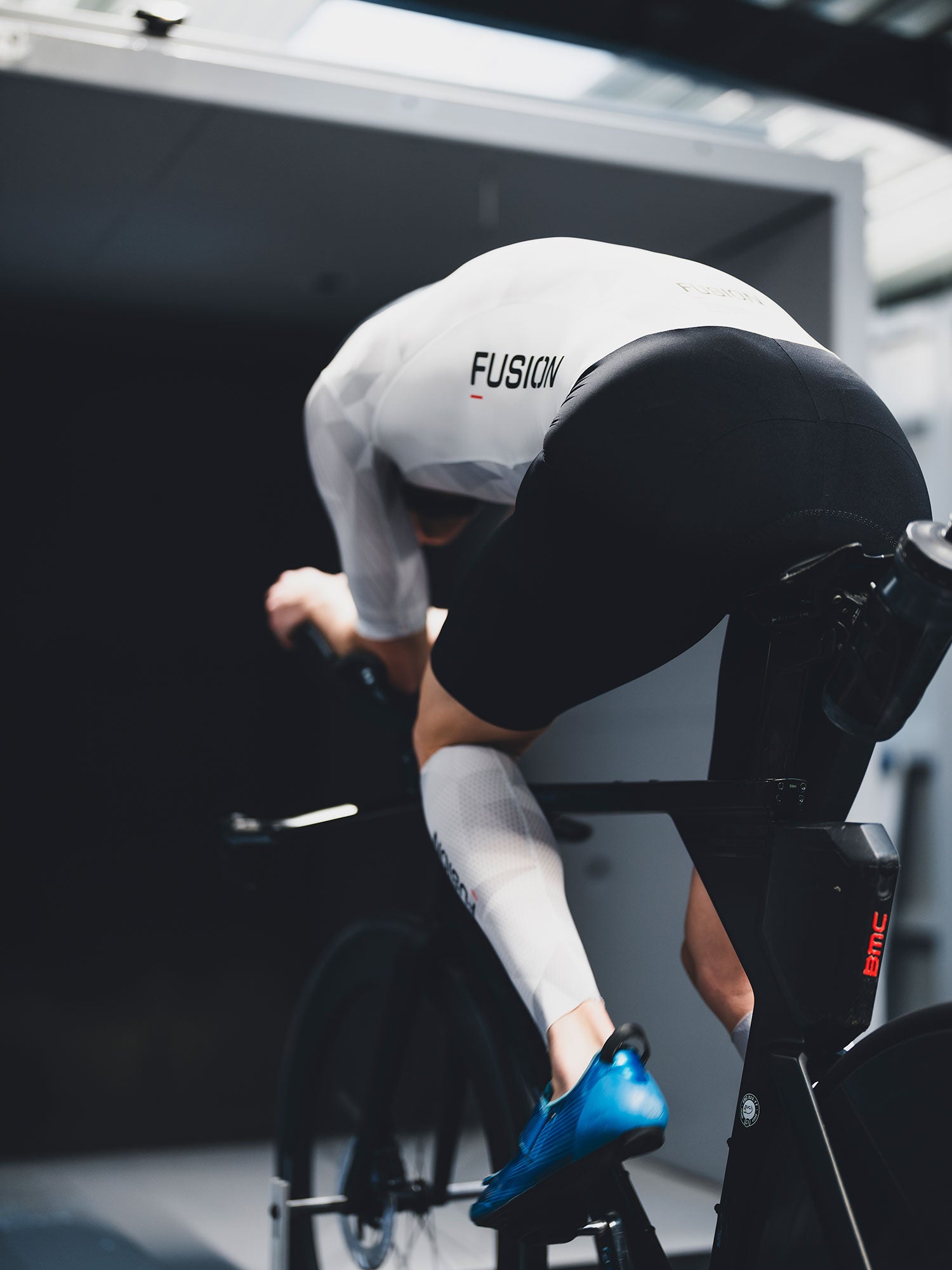
The fabrics for the TEMPO! PRO Tri Suit were selected on the basis of our extensive catalogue of tests conducted in our in-house wind tunnel. From these results, we selected the most promising materials for each part of the suit and developed a series of prototypes. These allowed us to see how findings from the wind tunnel translated into real-world testing with athletes. We always test our prototypes at different speeds and yaw angles and with a broad group of test riders, ensuring that our findings apply widely rather than only to one particular athlete.
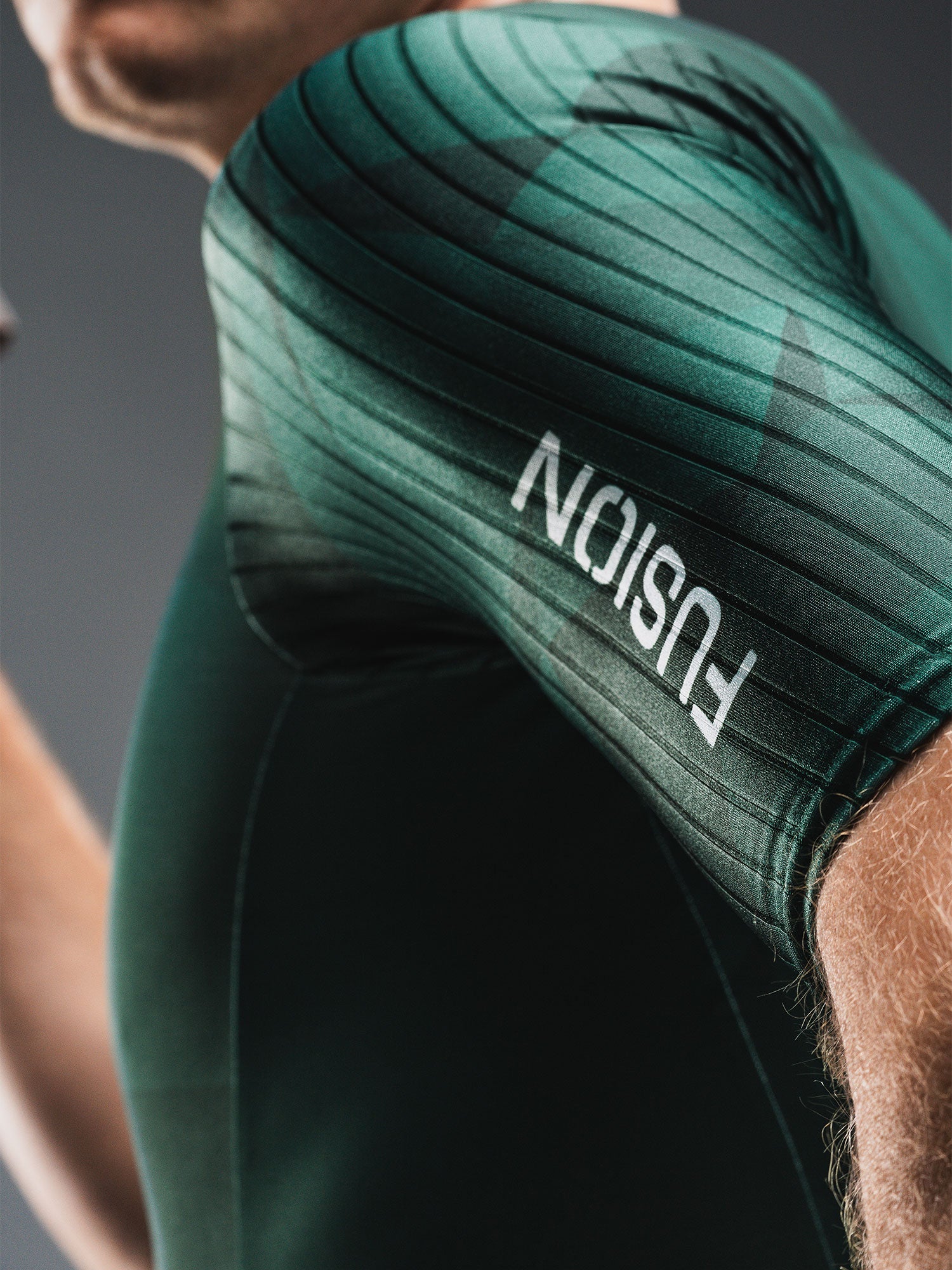
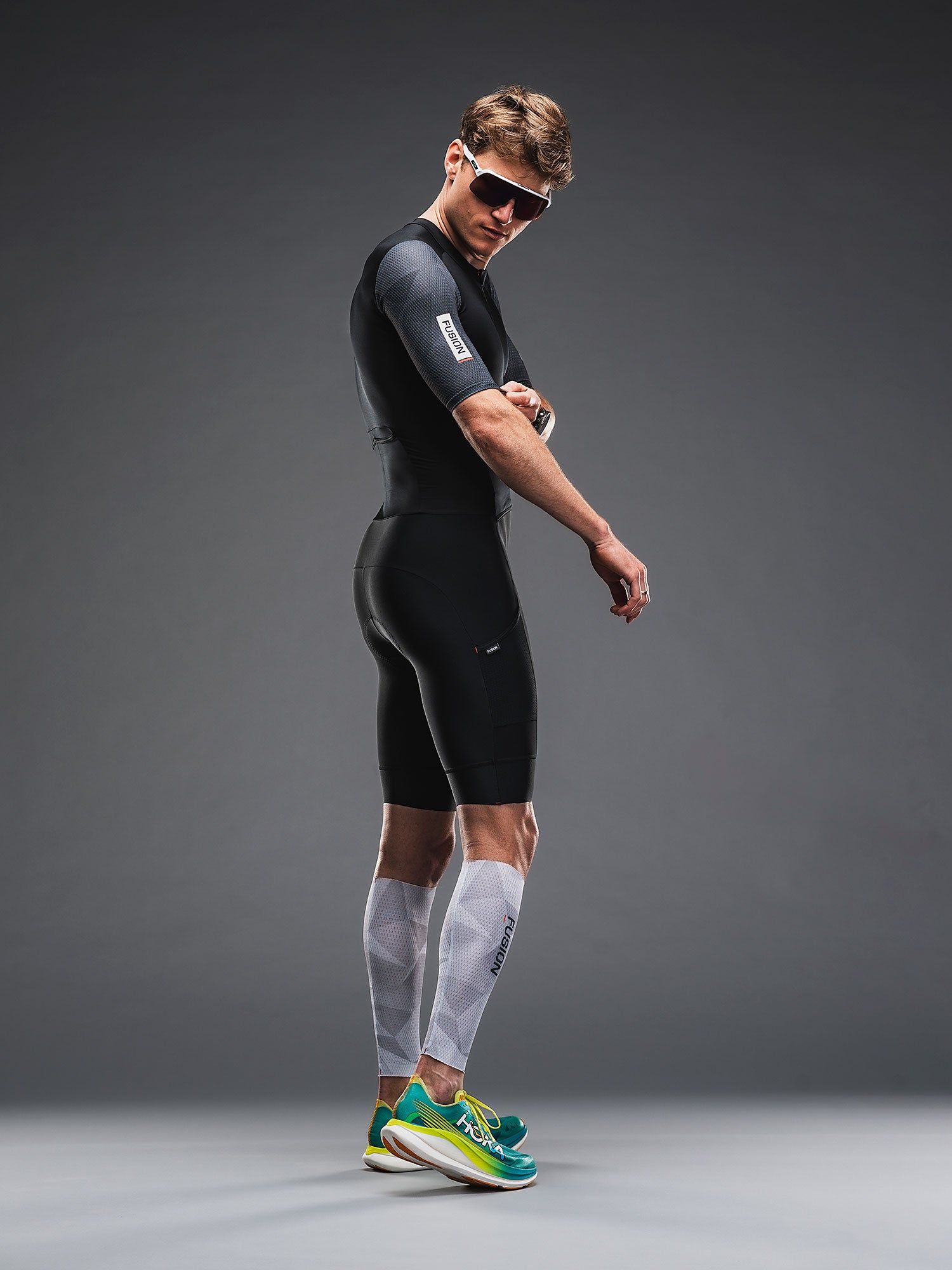
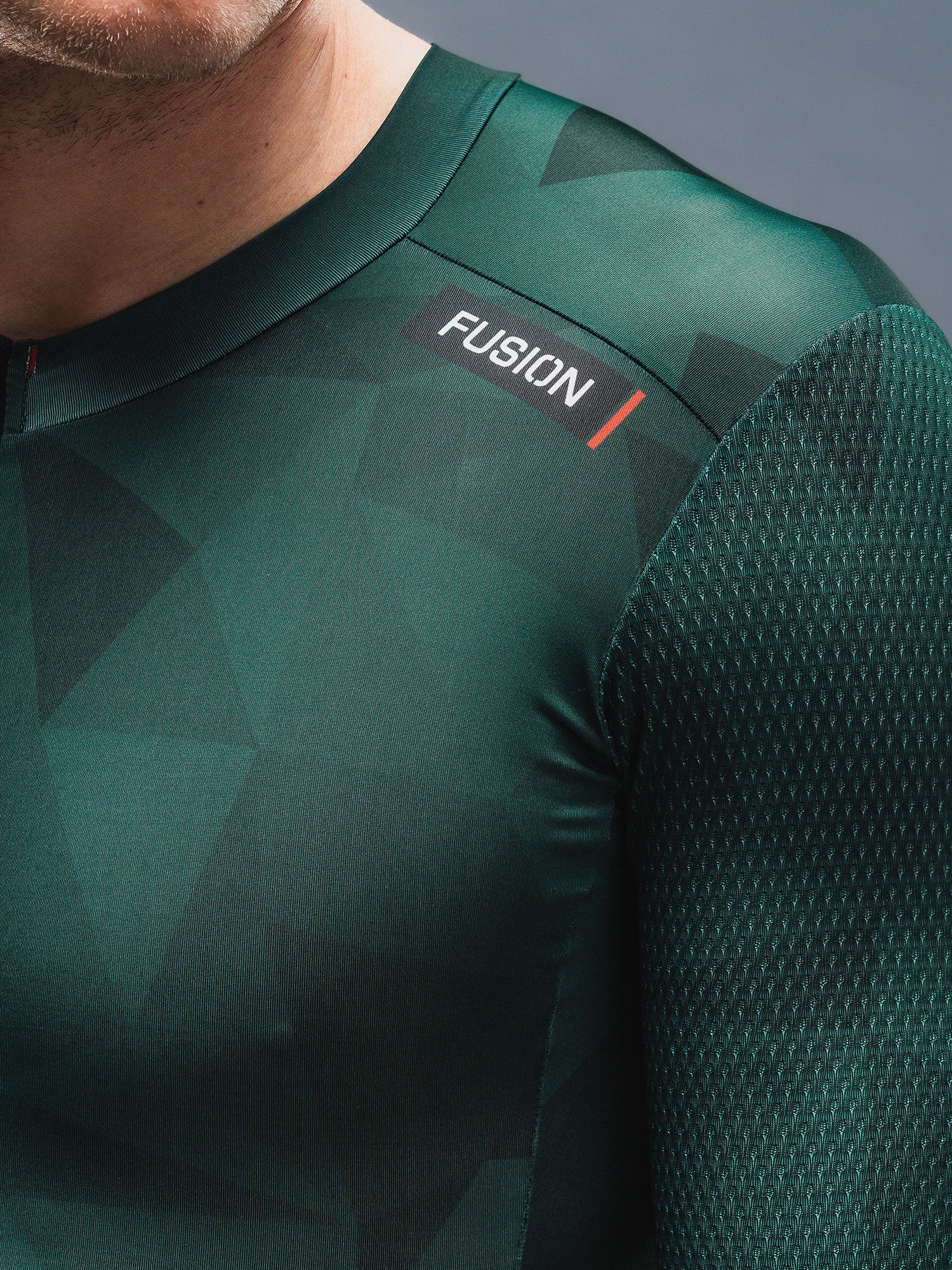
The new sleeve design on the TEMPO! PRO is a direct result of these extensive fabric analyses and tests. We identified the need for a sleeve construction that would perform optimally across a wider speed range. By combining materials, we created a sleeve construction that performs well whether you are climbing, maintaining high speed on the flat or descending.
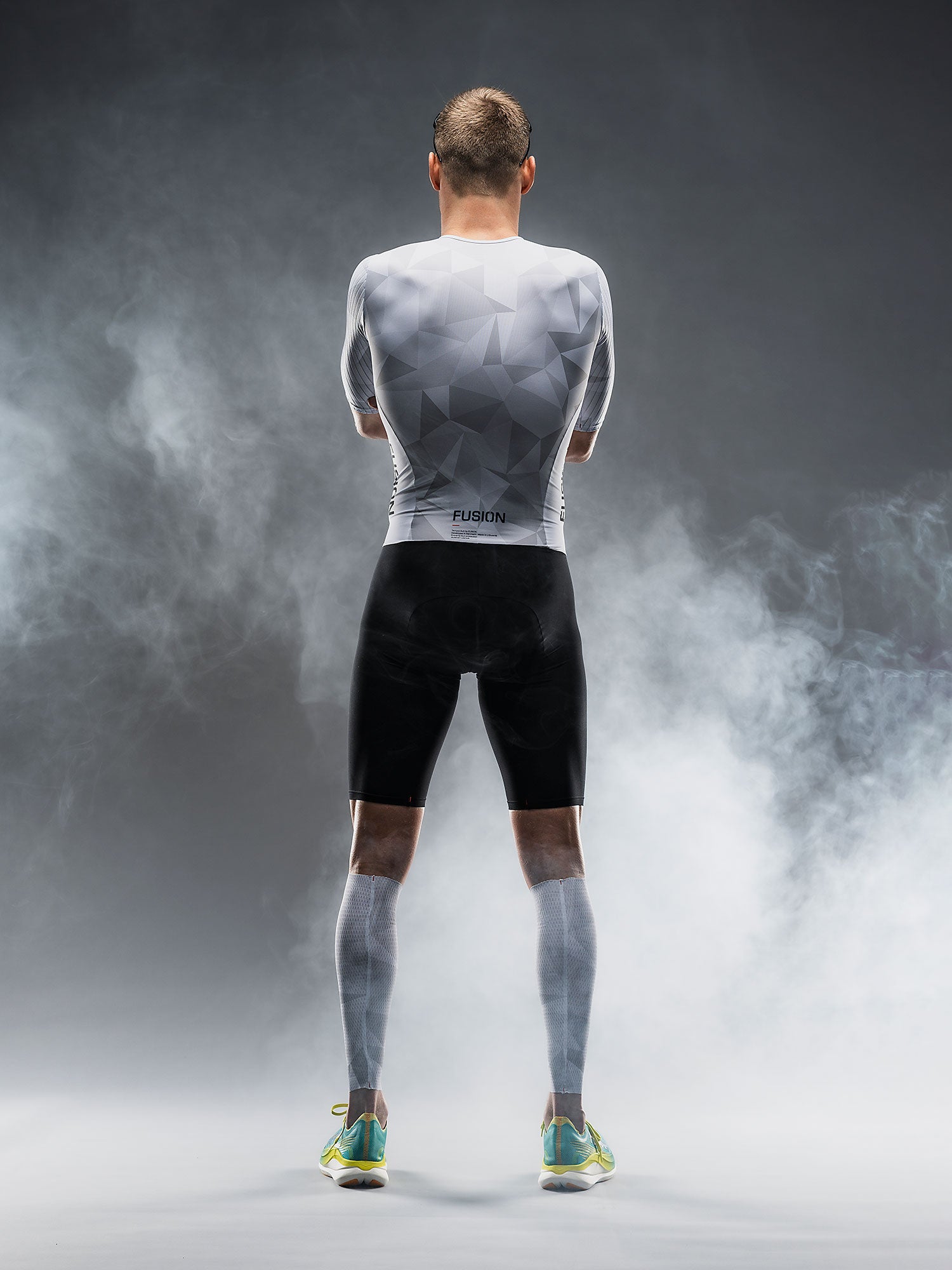
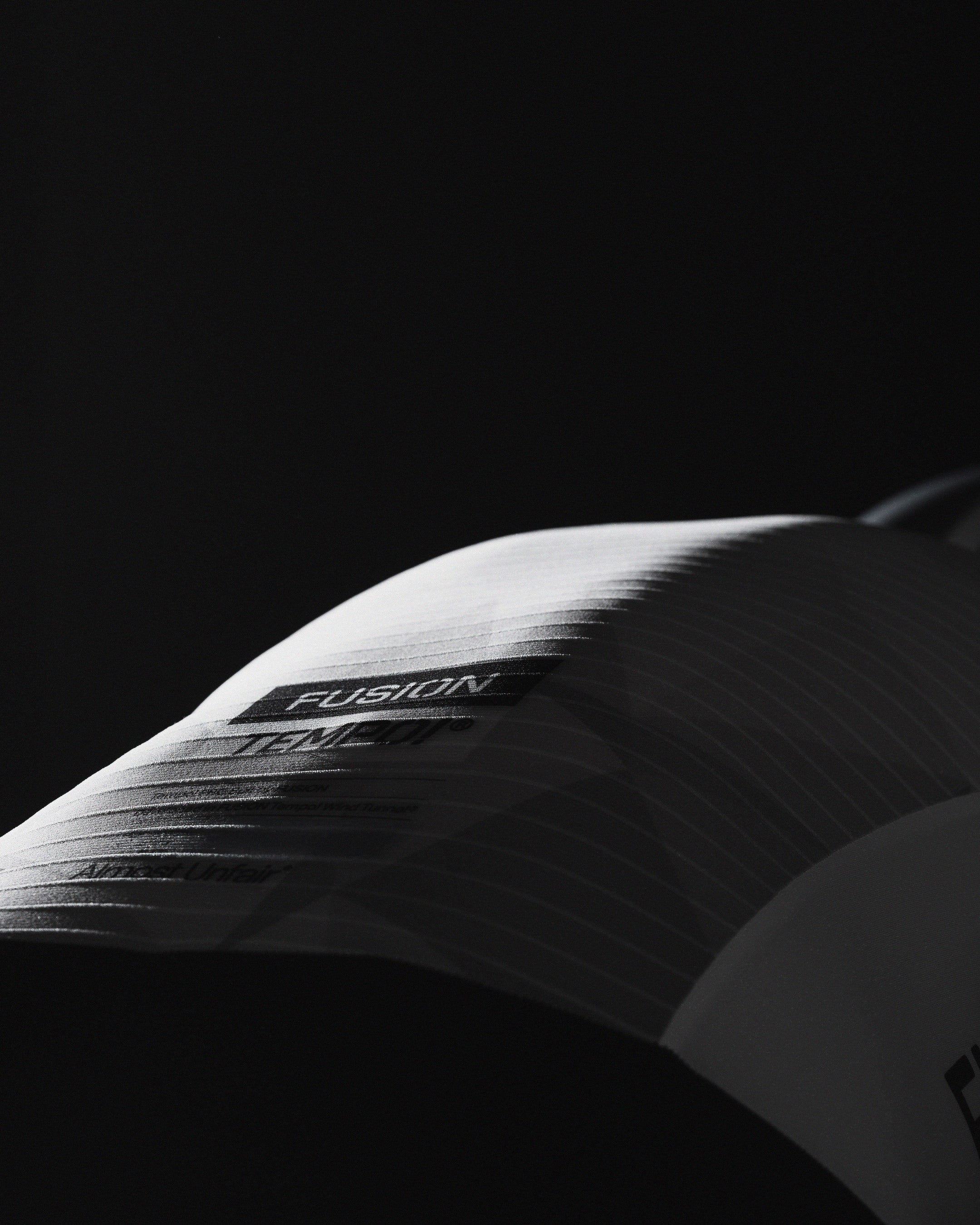
We selected the materials for the torso and legs with the same care. The striped fabric on the back was chosen specifically to optimise airflow. This decision was based on tests of several prototypes with different stripe spacings, heights and placements, tested with different riders in varying positions.
Before launching a new product, we always conduct outdoor aerodynamic tests and validate them against the results from our wind tunnel. Feedback from our professional athletes, who receive early access to innovations, is also valuable and contributes to the fine-tuning process. In short, the TEMPO! PRO is the result of countless hours of research and development aimed at creating the fastest possible suit for the sport’s best athletes.
Individual needs – a suit for every athlete
Aerodynamics is individual. Your speed and position on the bike, as well as your nutrition storage and sun protection needs, all influence which tri suit is best suited to your race.
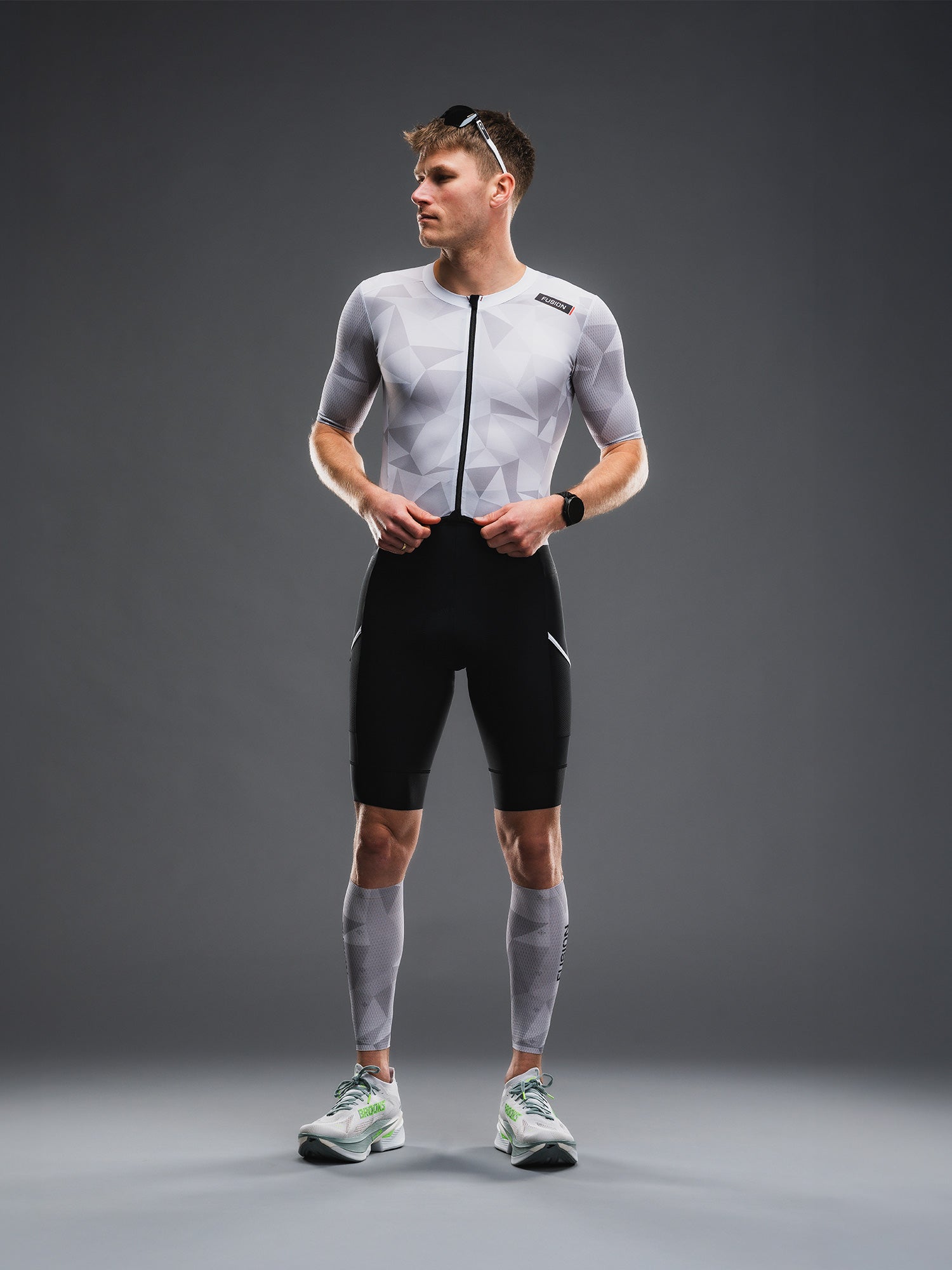
We believe in individuality, which is why we offer four different suits:
- TEMPO! PRO Tri Suit
- TEMPO! ONE Tri Suit (Men / Women)
- TEMPO! TWO Tri Suit
- TEMPO! THREE Tri Suit (Beginner)
Each suit is developed to meet the needs of specific groups of athletes, whether you are taking part in your first triathlon or racing for the win.
Case study: How we test
To demonstrate how our different suits have been optimised for their intended users, we present a case study from our in-house testing. Eric is a competitive age-group triathlete, and we recently conducted a test day with him as part of the final validation of our TEMPO! PRO suit. As part of the test, we carried out a speed sweep, testing different configurations at several speeds, with Eric wearing each of the four TEMPO! tri suits.
We have performed this particular test many times with a range of athletes to ensure that our products perform as intended. For simplicity, we will focus on this specific case study to illustrate the differences between the suits.

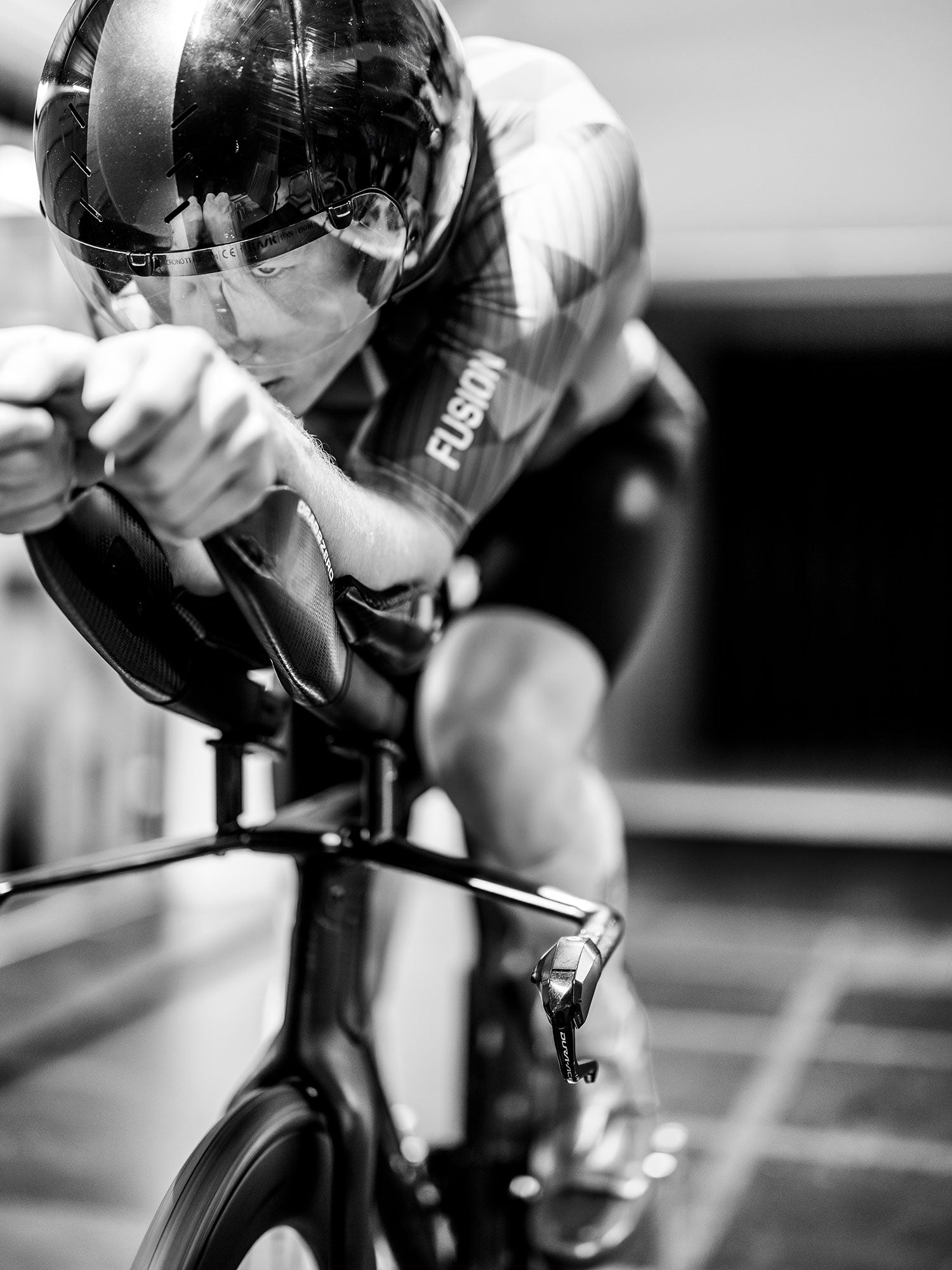
Image: Eric testing in our in-house wind tunnel wearing the TEMPO! ONE Tri Suit.
The four suits were tested on Eric at 9, 10, 11, 12 and 13 m/s with a constant yaw angle of 4 degrees. Eric rode his own triathlon bike in a familiar position to ensure he maintained a consistent posture. We closely monitor every test rider’s position throughout our test runs to ensure consistency, record any irregularities and repeat affected runs if necessary.
In our R&D process, we also consider a wide range of yaw angles to ensure our products perform in all wind conditions. In this case study, however, we tested Eric at a constant yaw angle that we found to be a good compromise between the most commonly observed yaw angles within the tested speed range.
Test setup
- Speeds: 9, 10, 11, 12 and 13 m/s, corresponding to 32.4, 36.0, 39.6, 43.2 and 46.8 km/h
- Yaw angle: 4° (fixed), the relative wind angle acting on the test object
- Bike and position: Eric’s own triathlon bike and a familiar, stable riding position
- We continuously monitor the rider’s position and repeat measurements at the slightest inconsistency to keep the dataset clean.
- In the full R&D process, we test a wide range of yaw angles. Here we selected one representative angle to make the comparison straightforward.
How to read the numbers
The chart shows the measured aerodynamic resistance in watts for each of the four suits at the five speeds in the speed sweep. For clarity, speeds have been converted to km/h. The five test speeds correspond to 32.4, 36, 39.6, 43.2 and 46.8 km/h.
There are a few things to consider when looking at this type of test data. As aerodynamic drag force is proportional to the square of speed, a relatively small increase in speed leads to a considerable increase in resistance, as the test data clearly show. Already at 32.4 km/h, however, aerodynamic resistance accounts for the majority of the resistance the athlete must overcome on the bike.
Another consideration is that an athlete racing at a relatively lower speed spends more time on the bike. A reduction in aerodynamic resistance that saves a given number of watts will therefore have a greater impact on that athlete’s finishing time than on a faster athlete experiencing the same watt saving.
Test results
The test with Eric shows how different suits perform best at different speeds, exactly as intended. This is a specific case involving one athlete, but it illustrates how we considered performance at different race speeds when developing our tri suits.
| Speed | Drag trends |
|---|---|
| 32.4 km/h | The TEMPO! TWO matches the more race-oriented suits at this speed. It also offers additional storage for race nutrition compared with the TEMPO! ONE and PRO. For some athletes, this can make a decisive difference on the run. |
| 36.0 km/h | At this speed, the TEMPO! ONE is actually the fastest for Eric, outperforming even the TEMPO! PRO. It is a proven all-round choice that continues to deliver top results. |
| 39.6 km/h | All three high-performance suits are closely matched, but the TEMPO! PRO begins to gain an advantage. |
| 43.2 & 46.8 km/h | This is where the TEMPO! PRO excels. It offers Eric a clear watt saving and is the obvious choice for professional-level speeds. |
| All speeds | The TEMPO! THREE is designed as a strong entry-level choice. It is not the fastest of our suits at either end of the speed range, but delivers consistent performance throughout. Like the TEMPO! TWO, it features a two-piece front construction for easier toilet stops and side pockets for additional nutrition storage. |
Summary
The case study with Eric, a highly capable age-group triathlete, highlights the need to consider individual use cases when choosing a race suit. Depending on the specific application, any of the three leading suits tested could be the best choice for Eric, meaning his ideal suit may depend on race distance and race conditions.
Ultimately, our wind tunnel tests yield different results for different riders, highlighting the individual nature of cycling aerodynamics. With this case study, we are not suggesting that this specific pattern will be observed in every triathlete.
Based on extensive testing, however, we have created a range of tri suits that meet the needs of a wide variety of athletes. Validation tests like this one give us confidence in the value of our product range and our ability to guide athletes towards the right suit for their individual needs. Aerodynamics is individual, but we take great care to ensure our knowledge and experience benefit everyone who uses FUSION products.
Next article
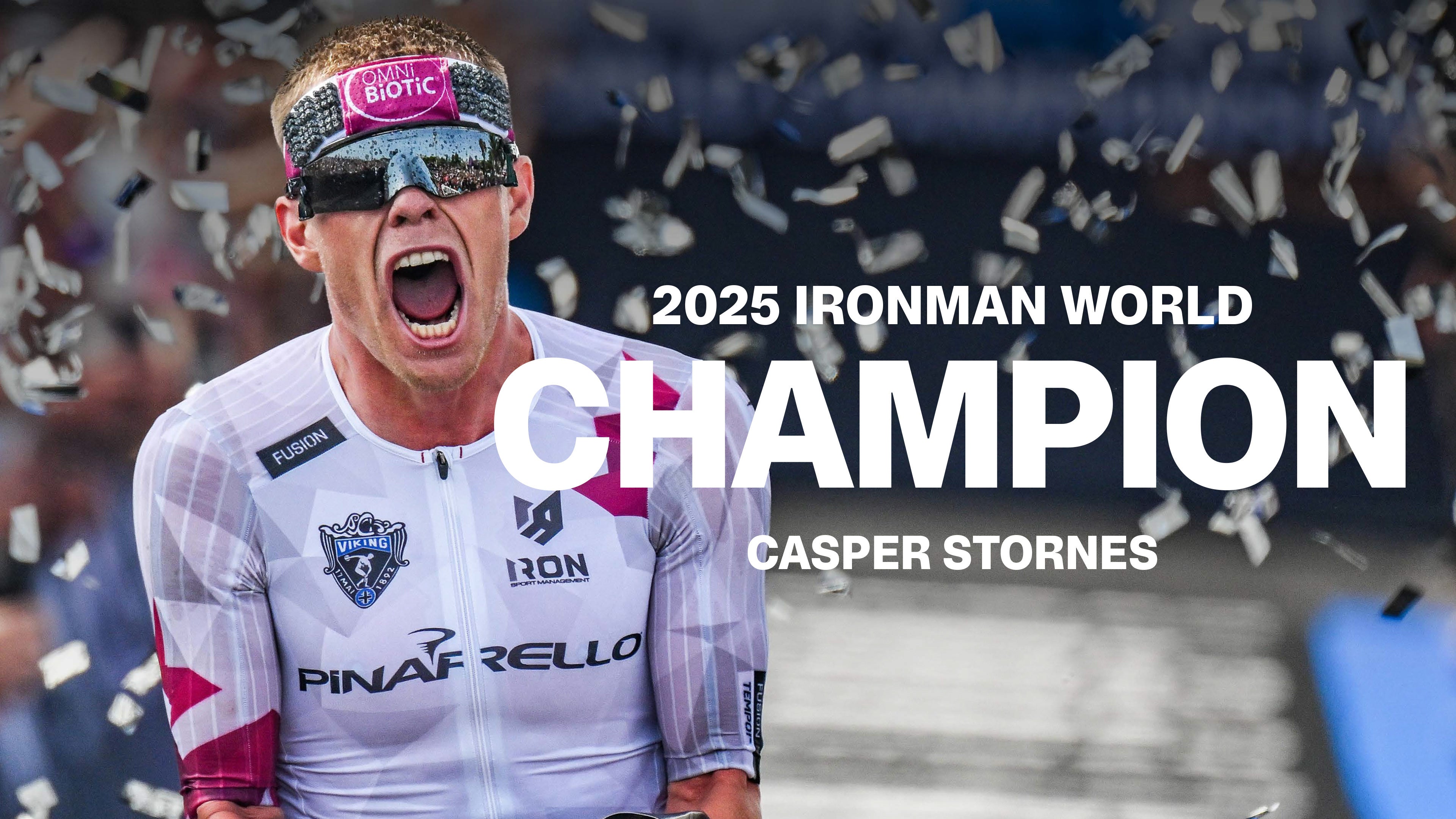
Casper Stornes: The Beginning Of A Plan To Become World Champion
25. September 2025
The FUSION Magazine
Discover the TEMPO! Tri Suits