Why we created MAS Tech
Aerodynamic performance isn't just about being fast under perfect conditions. It's about staying fast when conditions change. Here's how years of research, relentless testing and a different approach to fabric development led us to create MAS Technology.

Johannes Rom Dahl
Product Developer & Aerodynamics Specialist
13. October 2026
The FUSION Magazine
3 min read
Johannes Rom Dahl
Product Developer & Aerodynamics Specialist
Thanks for signing up to our newsletter!
Related articles
FUSION and Uno-X Mobility Cycling look back on two great years
Read article
Five years in a row: Behind the fastest bike split at the IRONMAN World Championships
Read article
Preview: Ironman Hawaii 2026
Read article
The world champion in the wind tunnel: 2006 vs 2026
Read article
We love development
Read article
When the Entire Team Went on the Attack
Read article
By product developer and aerodynamics specialist Johannes Rom Dahl
The Multidimensional Aero Shape (MAS) Technology project is a milestone for FUSION in our never-ending quest to innovate and create the fastest and best performance garments for endurance athletes.
The launching date of the new MAS Tech garments and fabrics marks the culmination of a project that started several years ago, and which has been a driving force in FUSION’s work with cycling aerodynamics that has also resulted in the construction of the Tempo! Wind Tunnel.
The MAS Tech garments and fabrics are built on patent-protected technology originally developed by Drag2Zero, a story which in itself is worthy of a blogpost. However, in this blogpost I will focus on why we created MAS Tech and which problem we were fundamentally looking to solve.
 Johannes during the testing of Menno Koolhass in the lead-in before Kona 2026
Years in the making
The project came about when we started working on widening our understanding of aerodynamic material properties in the lead up to the triathlon Full Distance World Championships of 2022.
Before that we had obviously conducted aero testing and used “fast” fabrics, but this time we took a more methodical approach. We commissioned a wide sweep of fabric wind tunnel testing conducted by Simon Smart of Drag2Zero to map fabric characteristics. Based on this we constructed samples and spent many long days doing velodrome and on-road testing along with some wind tunnel testing to correlate the results from the fabric testing with on-rider applications.
We learned a lot through this experimental approach with regards to which materials to apply and where, and how these materials behaved differently at different speeds. We also learned how some findings from the fabric mapping correlated well with on rider testing while others did less so.
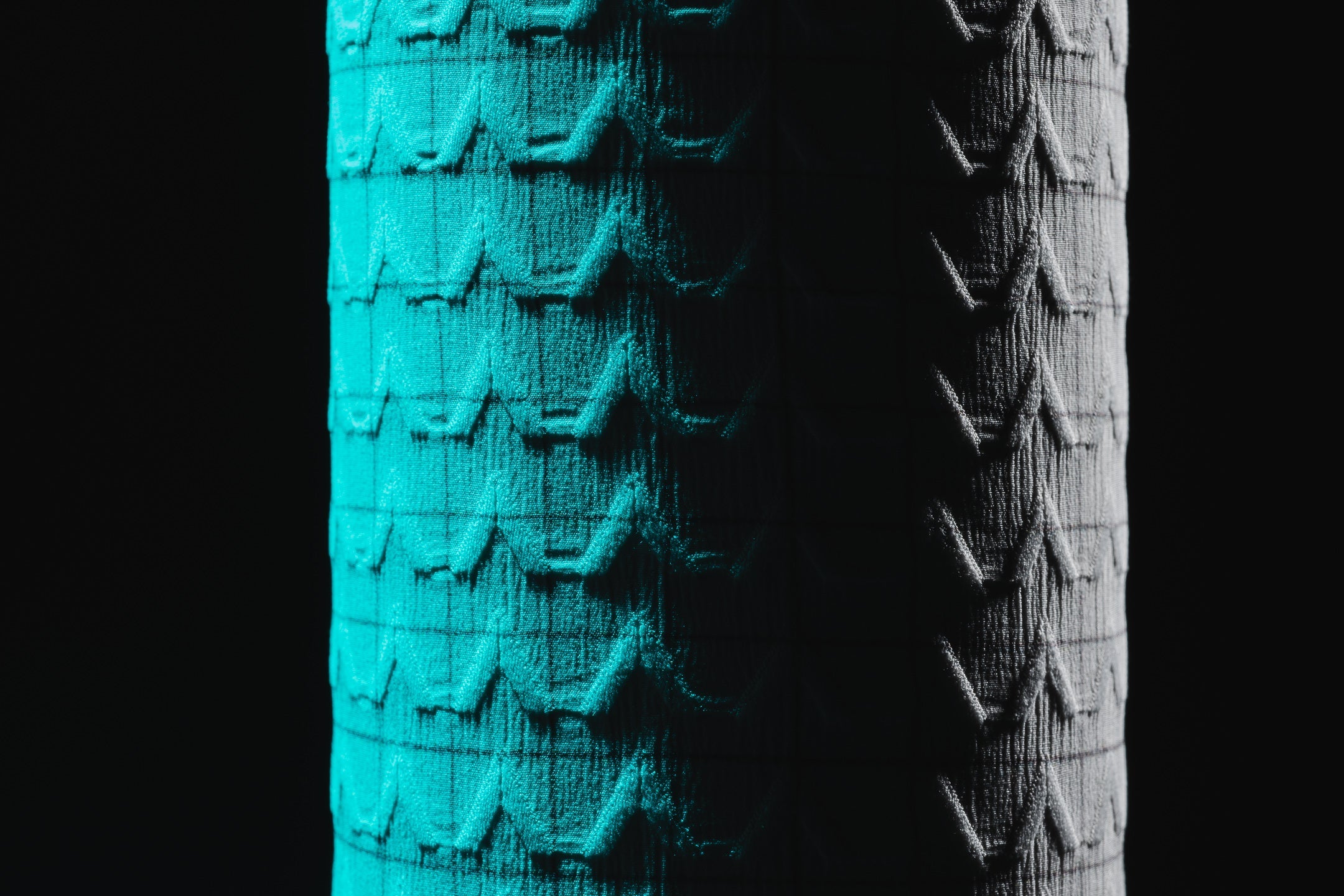
Most fabrics have a “drag bucket”: a speed window where its surface texture cuts drag the most. We mapped where that window sits for each fabric we tested. Inside it, the texture trips the thin layer of air flowing over the fabric from smooth to turbulent. A turbulent layer hugs the body for longer before it breaks away, so the wake behind is smaller, and a smaller wake means less drag.
To explain this concept, I have inserted a chart below that shows data from a cylinder test in our Tempo! Wind Tunnel of a smooth cylinder and two widely applied structured fabrics. Cylinders of various diameters are used to explore how fabrics perform on cylinders that broadly resembles shapes found on a cyclist, such as arms, thighs and lower leg.
The three cylinders behave very similarly at lower speeds, but around 35km/h for structured fabric B and at around 45km/h for structured fabric A, they enter a drag bucket, roughly halving the drag coefficient (Cd) of the cylinders to then slowly “recover” as the airspeed increases. The drag coefficient measures how slippery a shape is with the effect of speed removed, meaning the actual drag force still rises steeply with speed even with a decreasing Cd.

The same concept applies when we apply such fabric to a rider on the sleeves for instance. A fabric of a certain structure can induce a drag bucket at a certain speed range which lowers the overall drag of the rider. As we mapped fabric, ribbed as well as other macro- or micro-structures, we identified the ideal application for them based on this type of data.
The fabric A, shown in the chart above as a blue line, would be very effective at higher airspeeds as seen in time trialling or fast road racing, but only really starts performing at speeds above what most age group triathletes or amateur cyclists experience. For the majority of the time that fabric would be less ideal for those user groups. Furthermore, the quite abrupt change in performance means that even for elite athletes, slight changes in airspeed on a small climb or a shallow gradient on the road would bring them out of the optimal performance window.
To mitigate this, the use of fabric B could induce an earlier drag bucket, leading to a wider application but this is at the cost of absolute performance at higher speeds where overall drag is higher due to the quadratic relationship between speed and aerodynamic drag force - meaning that a certain gap in drag coefficient will cost more watts to overcome at higher speeds. The example above might seem like a bit of a digression, but it leads us to one of the core problems MAS Technology has been developed to solve.
 An avid cyclist himself, Johannes Rom Dahl has spent countless hours on the bike in the Tempo! Wind Tunnel, testing and refining aerodynamic performance.
Proven performance in the real world
Through our years-long collaboration with Simon Smart, first with the initial fabric testing that we commissioned through Drag2Zero and later through his invaluable contribution to the design and instrumentation of the Tempo! Wind Tunnel, we often discussed the shortcomings of the ribbed fabric most commonly used on aerodynamic cycling and triathlon garments.
In those discussions we kept coming back to the concept of a multidirectional and 3-dimensional structure that would not only widen the drag bucket but also make for a more forgiving structure when the athlete changed position or experienced airflow from changing yaw angles.
Previously, Smart had been the developer behind such a project with another clothing manufacturer, and while a great deal of research had gone into developing the concept, enough to warrant multiple patents protecting the innovation, the implementation of the fabric was halted when the UCI banned the silicone application used by the manufacturer.
Years on, the concept obviously still existed and Drag2Zero had acquired the patents but the issue of manufacturing fabric with such a complicated surface structure to a sufficient level of precision was yet unsolved.
In collaboration with Simon Smart, FUSION started working on this which ultimately led to the development of MAS Technology fabric and the acquisition of the patents relating to the technology by FUSION. The process was by no means unproblematic, and it took many samples made with various manufacturing techniques and in different compositions before the current versions materialised.
Without having access to our own in-house wind tunnel this project would have been close to impossible with our near unlimited testing capacity allowing us to evaluate the prototype samples continuously and rapidly to refine the next batch of samples.
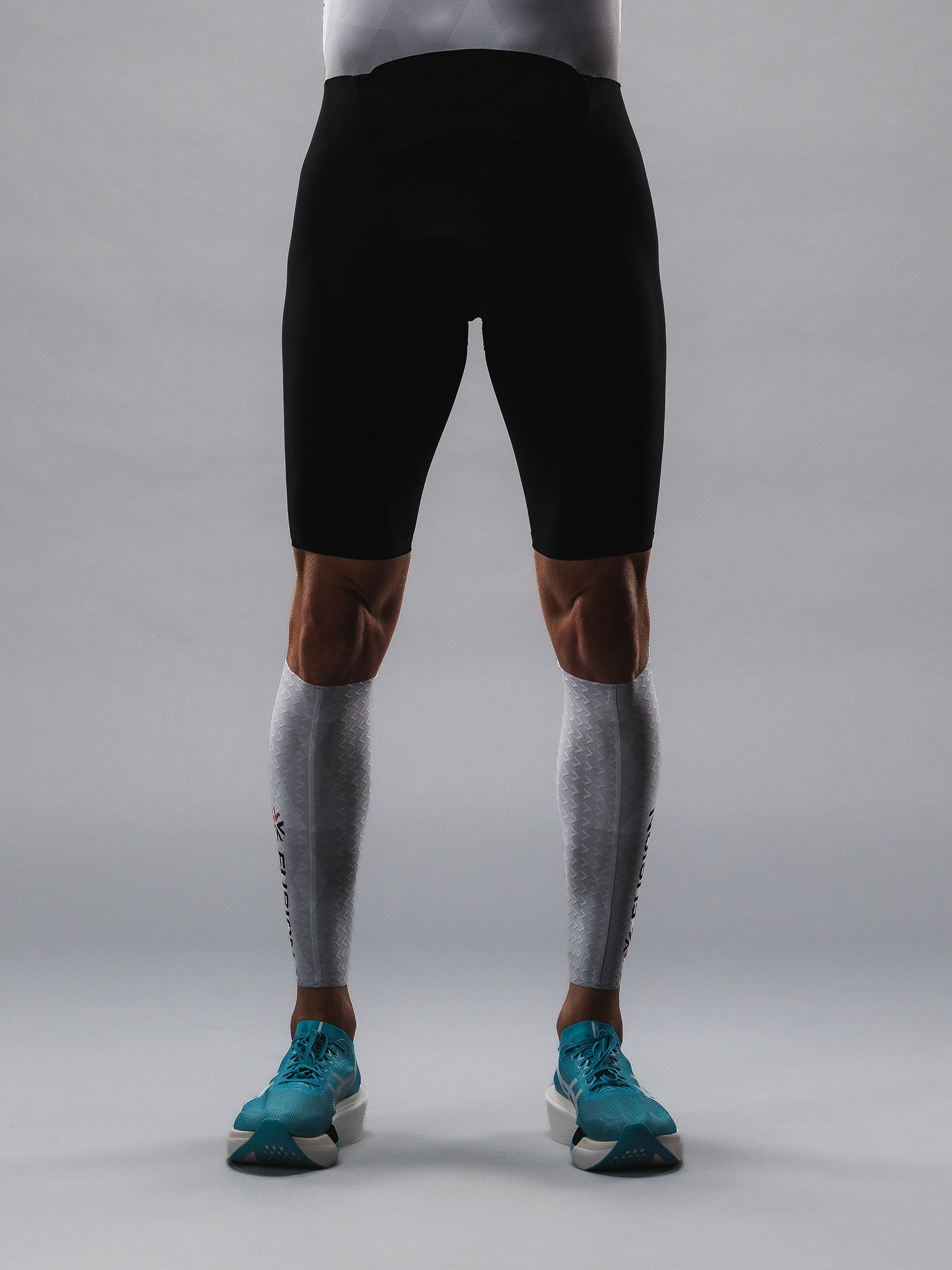
Ultimately this process resulted in MAS Technology fabric. An evolution of the initial concept developed by Simon Smart, where we can manufacture the fabric precisely to perform where needed.
Performance across every application
The example below shows one of the many MAS Tech samples and how the drag coefficient falls steadily to its lowest point at around 50 km/h, then stays low across a long, wide bucket with limited recovery to higher drag coefficients as seen with the other structured fabrics.
Adding to this, the fabric is already outperforming the smooth reference from around 35km/h ensuring a more stable performance when applied to a rider. Through hundreds of hours in the Tempo! Wind Tunnel and extensive outdoor testing we have been working to validate that this holds up in the real world and to our positive surprise we generally find that the MAS Tech garments perform more favourably when used on-rider since they are less sensitive to changes in direction and yaw of the airflow.
Moreover, the multidirectional nature of the fabric structure ensures performance at a range of angles relative to the airflow and we can furthermore adjust the orientation of the structure relative to the direction of airflow to tailor the performance window. A ribbed fabric works when the rib line up at the right angle to the airflow, and stop lining up when the wind comes from another angle or the cyclists changes position - this is mitigated by a multidirectional structure as seen on the MAS fabrics.

The chart above shows one of many variations of the MAS Tech fabrics, and by having full and exclusive control of the manufacturing of the raw fabric we have since developed MAS Tech fabrics to suit different applications, all optimised to widen the window of performance and to ensure stable performance when applied in the real world.
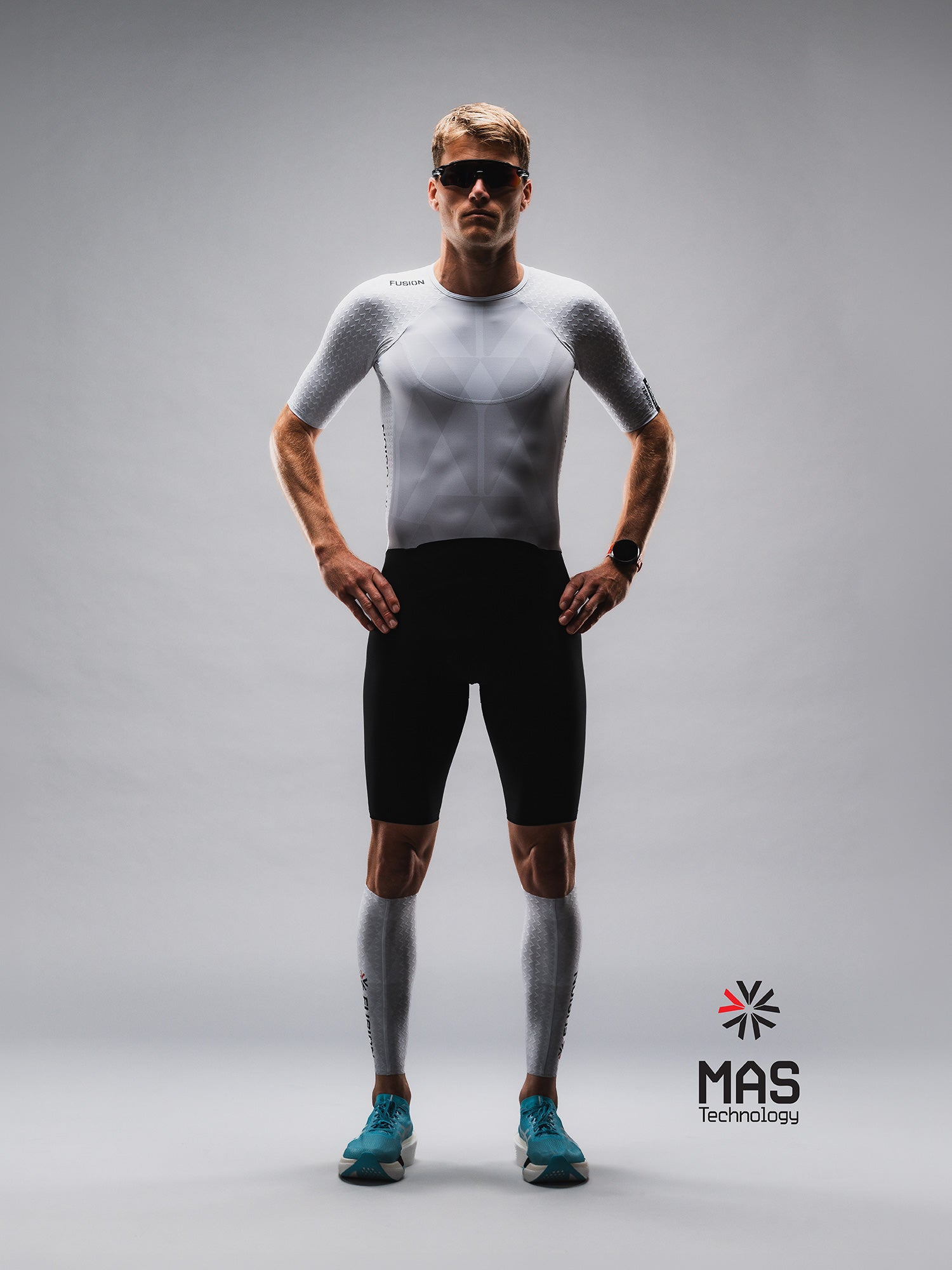
MAS Technology is not just a new fabric for FUSION; it is a full concept where we approach cycling and triathlon garments holistically by tailoring the fabric properties for each element of the garment to lower drag across a wide range of speeds while offering absolute performance in the speed bracket most applicable to a particular use case.
MAS Tech garments will look different and employ variations of the MAS Tech fabric to ensure that all garments perform to their best for their intended use, whether that is for a pro athlete racing for the fastest bike split in a Full Distance Triathlon-event; a sprinter seeking utmost performance at 65-75 km/h or an endurance athlete looking to meet the wide range of speeds experienced in a mountainous Gran Fondo.
We created MAS Tech to take garment performance to the next frontier and it is the current culmination of a long-lasting and continuously ongoing commitment to understanding and developing the materials we work with in order to manufacture the fastest possible aerodynamic garments.

Next article
FUSION and Uno-X Mobility Cycling look back on two great years
Both Uno-X Mobility and FUSION look back on two great years and a partnership that has strengthened both sides.
22. October 2026
The FUSION Magazine
3 min read