- Cycling
- Heat Performance
- Insight
Performance in the Heat: Sun Protection Also Means Speed

Frederik Muff
Wind Tunnel Operator
09. July 2026
The FUSION Magazine
3 min read
Frederik Muff
Wind Tunnel Operator
Thanks for signing up to our newsletter!
Related articles
FUSION and Uno-X Mobility Cycling look back on two great years
Read article
Why we created MAS Tech
Read article
Five years in a row: Behind the fastest bike split at the IRONMAN World Championships
Read article
Preview: Ironman Hawaii 2026
Read article
The world champion in the wind tunnel: 2006 vs 2026
Read article
We love development
Read article
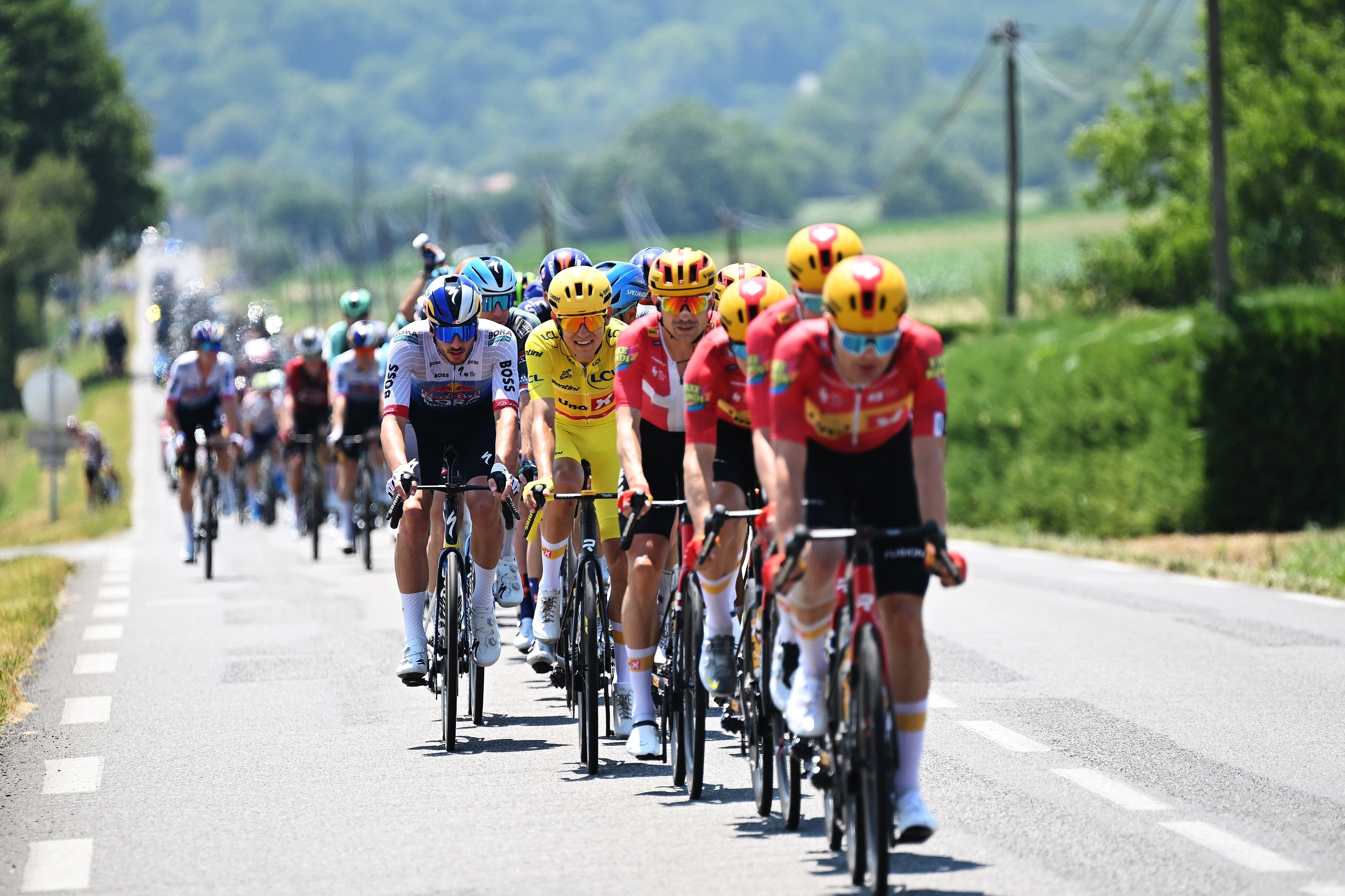
Photo: Getty Images
The sun is beating down on the peloton in France, and temperatures in this year’s Tour are approaching 40 degrees Celsius. This adds a crucial and often overlooked dimension to the clothing the riders wear, as cooling and sun protection become some of the most important performance factors.
When temperatures in France approach, or even exceed, 40 degrees, it is not only the legs that are working. The entire body is fighting against the sun, the heat, and prolonged UV exposure.
For riders at the front of the peloton, performance is not only about watts, position on the bike and the aerodynamics they have to overcome when keeping the day’s breakaway under control. It is also about keeping the body in balance as temperatures rise and the hours in the sun add up.
That is also why we see riders constantly cooling themselves with ice packs, ice vests, and why some teams have even used strategies where riders place their hands in ice baths to cool the body through the wrists.
Sun protection is not just about comfort. It is part of performance.
At FUSION, we approach cycling apparel through a holistic understanding of performance. When we select materials, we look at aerodynamics, thermodynamics, and sun protection as interconnected factors. Materials should not only be fast in the wind. They should also help the rider maintain an optimal temperature balance and provide effective UV protection during prolonged exposure to the sun.
The Heat Changes the Demands
On flat, fast stages, aerodynamics is often the dominant factor. But on hot days, long climbs, and stages with many hours of sun exposure, the picture becomes more complex.
When speed drops on climbs, the cooling effect from the wind also decreases. When the sun hits the shoulders, back, and arms directly, the need for protection increases. And when the body has to work hard for hours, the heat load can gradually affect both comfort and the ability to perform.
Research into heat and elite performance shows that high temperatures can affect the cardiovascular system, thermoregulation, and the perceived level of exertion. That is why strategies such as heat acclimatisation, fluid management, and cooling are recommended in hot environments.
In preparation for the Tour, riders therefore carry out heat training, riding indoors on a turbo trainer while wearing winter clothing. On hot days, they weigh themselves before and after stages to make sure they are not taking in too little fluid. For the same reason, we do everything we can to ensure that our apparel supports the riders as effectively as possible in these extreme conditions.
 Jonas Abrahamsen is always good for a twinkle in the eye and takes cooling to the extreme here before the start of Stage 5 - much to the amusement of his teammates. PHOTO: Getty Images
Aerodynamics Becomes Secondary
A subheading like this is something of a statement for a company that has invested in a in-house Wind Tunnel. But nevertheless, that is the reality when Tour riders are sitting in the scorching sun on a climb. On days that are often among the hottest of the entire cycling season, the most important performance factor is making sure the rider does not overheat.
For these conditions, we developed our Grand Tour Suit, with materials selected specifically for the demands of extreme heat. The material on the front and sides is thinner than on our Breakaway Suit. The material on the back has a UPF 50+ rating. UPF stands for Ultraviolet Protection Factor and indicates how much of the sun’s UV radiation the fabric blocks.
A UPF rating of 50+ means that only 1/50 of the sun’s rays pass through the material. In other words, it blocks 98% of the sun’s rays. That is a very high level of protection, even during many hours of sun exposure. Still, it cannot stand alone. It has to be combined with a material that also cools the rider as effectively as possible and helps prevent core temperature from rising too much. That is why both the front and back are made from materials specifically chosen to support cooling.
That is the essence of dressing a team for the Tour. You have to see the entire development process as an interaction between many factors. It is no good if a suit is extremely fast in the wind but at the same time causes the rider to overheat and ultimately lose more watts than he has saved. Conversely, sun protection does not work optimally if it stands alone.
In other words, the right cycling apparel must combine speed, temperature regulation, and protection in one package.
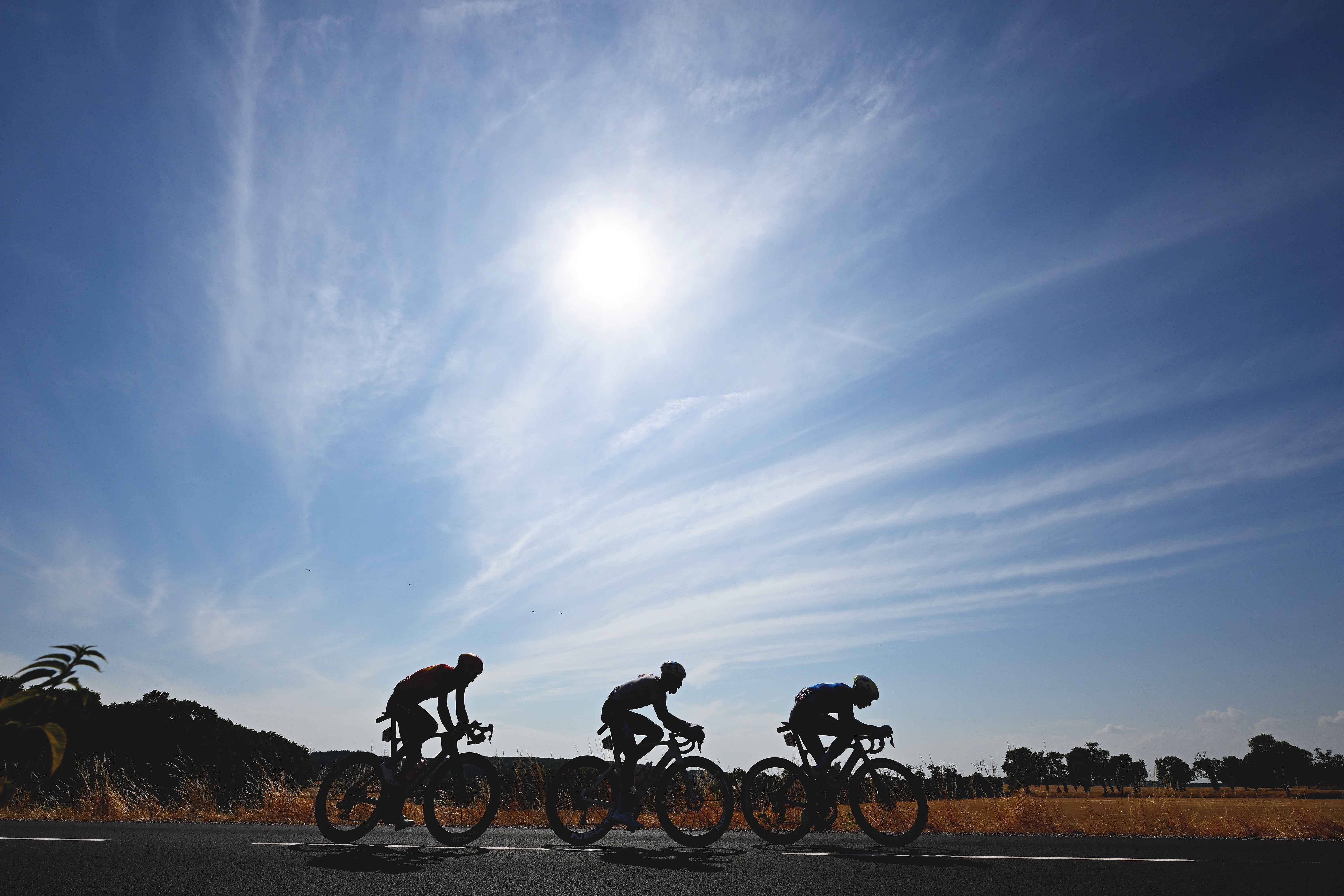
 On the open French roads, there is little shade from the scorching sun and the ongoing heatwave in southern Europe. PHOTO: Getty Images
Sun Protection Is Performance
In cycling, sun protection is not the opposite of speed. It is part of total performance. When fabrics can help protect against UV radiation, support the body’s temperature regulation, ventilate correctly, and still be aerodynamic, it becomes more than clothing.
It becomes performance equipment.
On the hottest days, it is not only about saving watts.
It is about being able to keep using them.
Next article
Q/A with Olav Bu: Performance in the heat
21. July 2026
The FUSION Magazine
5 min read